
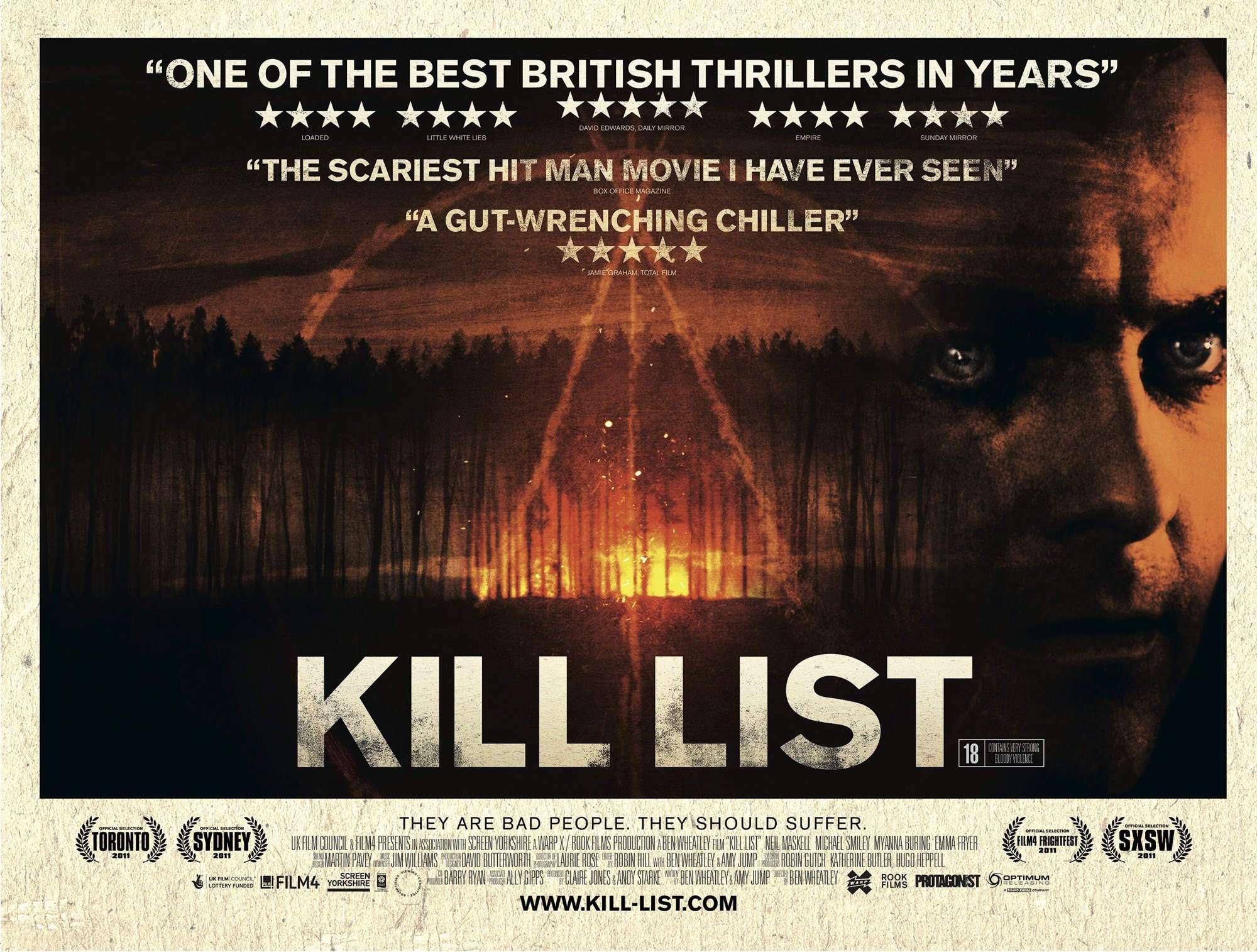
Kill List focuses on a couple of hit men, Jay (Neil Maskell) and Gal (Michael Smiley), the former of whom has been avoiding work for close to a year in the aftermath of a badly botched job in Kiev. Set in the wake of the 2008 recession money is tight and after some manipulation from his wife, with some support from Gal, his partner in professional murder, Jay agrees to take on another assignment. In exchange for a big pay day they are tasked with carrying out a trio of kills by a shadowy employer with an infernal secret agenda. Events rapidly take a turn for the worst and both men find themselves descending into a steadily more terrifying heart of darkness.
Ben Wheatley's second movie is a masterful fusion of the British crime thriller and occult horror genres that contains some of the most unpleasant, look-away-now moments of on-screen violence I've witnessed in recent years. For most of the first act you could be forgiven for thinking you’re watching a brutally effective kitchen sink drama about a marriage that is in the process of hitting the rocks in spectacular fashion. If you thought the dinner party scene in Wheatley’s debut Down Terrace made for uncomfortable viewing you've seen nothing yet.
The thing that immediately struck me during the opening act was the performances. One of the things that Wheatley excels at is casting his movies. Neil Maskell, MyAnna Buring, Michael Smiley and Emma Fryer are all remarkable from the get go. As in his debut movie, the way Wheatley encourages improvisation really pays off. All of the dialogue throughout Kill List's 95 minute run-time feels 100% real. There’s an ebb and flow to the conversations that echoes the kind of natural rhythm that can often be found in the movies of Mike Leigh (the opening 20 minutes play out like Abigail's Party goes to hell).
Michael Smiley and Neil Maskell are absolutely convincing as two friends who have gone through hell together. Although they have their ups and downs throughout Kill List (the downs including a couple of brilliantly staged scraps) it’s never up for dispute that they would die for each other. It’s one of the most riveting bromances in modern cinema with both actors delivering a performance that supports and enhances the other. Most of the movie's often dark humour comes out of the various conversations between these two characters with much of the dialogue growing organically out of Wheatley's already mentioned predilection for improvisation. Just as in Down Terrace none of the humour feels forced. It flows effortlessly and is mostly rooted in the dialogue as opposed to the situation. MyAnna Buring is also tremendous as Jay’s wife. She throws herself into the argument scenes with an intensity that’s utterly convincing. Likewise, without giving anything too much away about her role, Emma Fryer is an inspired piece of casting as Gal's creepy girlfriend Fiona.
 To call Kill List brutal would be like saying water is a bit wet. This is a violent story about violent people doing violent things. I approached the movie anticipating some carnage and Wheatley delivers big time. Crucially though, none of the more overtly horrific moments in Kill List are fun. The movie sets out to disturb and achieves its goal with absolute surety. There’s a scene involving a hammer that is so relentlessly, teeth-grindingly painful to watch that it became a challenge to keep my eyes on the screen. I was reminded somewhat of the sort of unflinchingly realistic explosions of violence that often crop up in European cinema (Nicolas Winding Refn's Pusher Trilogy comes immediately to mind) or in the movies of Martin Scorsese. The kind that leave you uncomfortably numb rather than elated. There's also a matter-of-factness to the way the violence is staged that speaks volumes about who these men are, the world they choose to live in and what they're capable of. Although it's tough to watch at times you can’t help but give Wheatley a mental pat on the back for his willingness to push the envelope so far beyond the boundaries of what you typically expect in British cinema. All too often movies err on the side of caution when it comes to presenting an accurate reflection of exactly how unglamorous violence is in the real world. Kill List isn't interested in dressing the violence up. To do so would be to dilute the effectiveness of the movie. Kill List is full strength.
Another thing I love about this film is its structure. The movie is composed of three very different acts each of which bleed into the others in some very interesting ways but are nonetheless quite distinct from each other in both tone and content. In the first act (the aforementioned dinner scene from Hell) we’re introduced to the main protagonists while the second act focuses almost entirely on Jay and Gal as they carry out the job. There’s only one moment within the first act that suggests the movie is going to drift into horror territory. The hints become more forceful during the second act courtesy of some truly chilling moments that provide an indication of the dark undercurrents that are threatening to drag our two oblivious "heroes" down. With the third act we’re deep into genre territory as events take a nightmarish turn that forces our protagonist (and the viewer) kicking and screaming in the direction of one of the most nihilistic, distressing conclusions I've experienced. In the last five minutes of Kill List director Wheatley delivers a viscerally shocking, punch in the gut ending that is as pulverisingly bleak as it is emotionally excoriating.
Another feather in Kill List's cap is that it's not dumb. The movie is a knotted perversion of the King Arthur legend and throughout the run-time there are a number of little clues scattered throughout like Easter eggs that allude to the story of the once and future king. It’s yet another layer to a movie that already has quite a lot going on thematically. Add to this the almost total lack of exposition, a practice for which director Wheatley evidently has a close to zero tolerance attitude, and we have a movie that challenges the viewer to fill the blanks and gaps. It’s an interesting storytelling decision that proves as effective here as it did in Wheatley’s brilliant debut Down Terrace (review here).
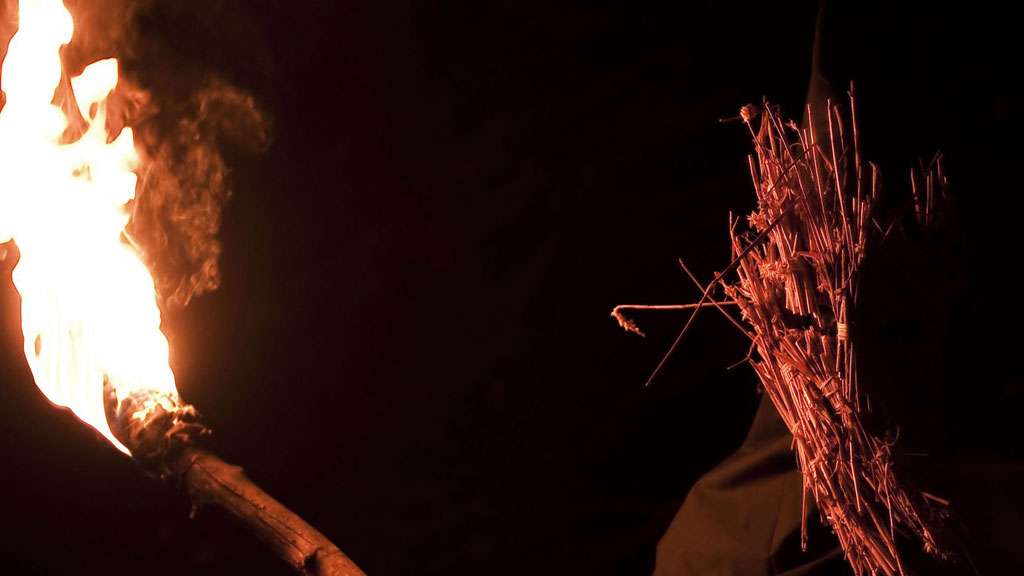
Another plus that Kill List shares with Wheatley’s debut is DOP Laurie Rose. Rose brings a sheen of quality to the production that’s purely instinctive. This is an astonishingly well shot movie. Even in its ugliest moments it's beautiful to look at. As with Down Terrance it was mostly shot in a handheld fashion using the Red One camera which given the unwieldy nature of that beast of a unit makes Rose's achievement here all the more impressive. The camerawork coupled with the movie’s threatening score which is delivered courtesy of Jim Williams, another Down Terrace veteran, contributes to the palpable sense of constantly escalating dread that builds throughout until it crescendos in the movie’s majorly fucked-up payoff.
Down Terrace cemented Ben Wheatley’s reputation as a talent worth watching. With Kill List he delivers on that early promise and proves also that he not only understands how to make an effective horror movie but is also entirely capable of throwing different genre stylistics into a melting pot and cooking up something unique (Kill List is as much a drama as it is a crime movie as it is a horror movie) to stirring effect. It’s the juxtaposition of these various elements that makes his movies so unpredictable and it’s this unpredictability that gives them their edge. Kill List is not only one of the best crime movies of recent vintage but also one of the most shattering, brutally effective, troubling horror movies I've seen in quite some time. The horror element of the movie is so well conceived that I almost wish Wheatley would turn his hand to delivering a straight up genre movie. He’s one of the most interesting film-makers dabbling in the darker corners of cinema today. It’s easy to determine what movies and directors influenced his vision here (The Wicker Man, Race with the Devil and any number of great UK crime movies). That he managed to deliver a finished product that not only bears comparison to these movies but also achieves the lofty goal of being compared favourably with them is quite an achievement.
Steve's score:


