Showing posts with label Interview. Show all posts

Sunday, 9 August 2015

Frightfest London 2015: Levan Bakhia Interview


Landmine Goes Click pretty much sums up why festivals are important.  It's the discovery of movies like this that makes sitting through the occasional dreary, unoriginal snorefest worth it.  I'm going to say very little about this movie except that if you saw  director Levan Bakhia's last feature, the enjoyable 247°F, you could be forgiven for expecting something of similar quality here.  You would be very wrong.  Landmine Goes Click for most of it's runtime delivers an excruciating exercise in escalating tension before delivering one of the most powerful final acts I've seen in recent years.  Just in case I've not been clear.  DO NOT MISS THIS MOVIE.  Without further ado...here's the interview.

AOTD: Tell us a little bit about your experience shooting 'Landmine Goes Click'. How many days did you shoot for? Did the script change at all during the shoot? Were there any unexpected challenges or did it all go smoothly?

LB: Best way to describe the experience of shooting our film is to check the playlist on my personal youtube channel, where we made episodes at every stage (link).

One of the most interesting and different aspect of this production was that we were pulling off very long takes.  70% of the shots are more than 5-6 minutes, and sometimes we had to do it 5-6 times.   And it was not rehearsed, we were improvising.

Actors knew what their objectives were, and they were free to do what they wanted.  I did not block their movement, I gave them total freedom.  But in order for this to work, there was a very unique experience of me working with cinematographer, Vigen Vartanov.  I worked with him as with an actor.  Instead of blocking the camera move, I would give the same kind of objective to him as well.  So basically, he was performing together with actor, he did not know what would happen, he had to reflect on what was happening.  He would have objectives like to be interested, or insulting, or sometime he would even have an objective to lead actors movement.  It's complicated to explain, filmmakers can take this approach and see for themselves how it works.

I love working with actors, that is my favorite part of directing.  So combining cinematography with acting was very special experience.

As for the script, well, biggest part of it was improvised.  I mean, we had a script, and I would ask actors that we are running certain pages, but I wanted them not to stop until I would say so, and then I would push them to the parts where they did not memorise the text, and approximately 50% of the takes in final edit are those parts.  Some lasted for minutes of unprepared improvisation.  I like improvisation.  But of course the script was always there as an outline.

AOTD. It saddened me to read that Kote Tolordava, who delivers an astonishing performance in the role of the villain of the piece, passed away recently. He was a mostly terrifying, sometimes hilarious and utterly unpredictable presence in the movie. I also understand that he was a great friend of yours. What made you think of him for Ilya and were there any qualities he brought to the role that surprised you?

LB: I met him on audition of Landmine Goes Click, and we became very close friends.  You see, when an actor has to perform what he had to perform, you really need to open up with them, he really needed to have full trust in what was he about to do.  He was very realistic in everything he did, he was "in the moment" all the time.  You see, even if your question started about him passing away, I avoid thinking about it.  This is a tragedy, I planned to have him in many films, he wanted to show himself to hollywood as well.  He was very famous in Georgia, but his talents are far bigger than that.  I think he had a chance to come to Hollywood and give himself to better project.  I'm sure he would surprise everyone on auditions.  Ehh, it's sad that I have to talk about him as someone who has passed away.  God bless him wherever he is. 

I don't know what made me think about him as Ilya.  I think it just clicked when I saw him on audition.  He was just right.  I knew it.
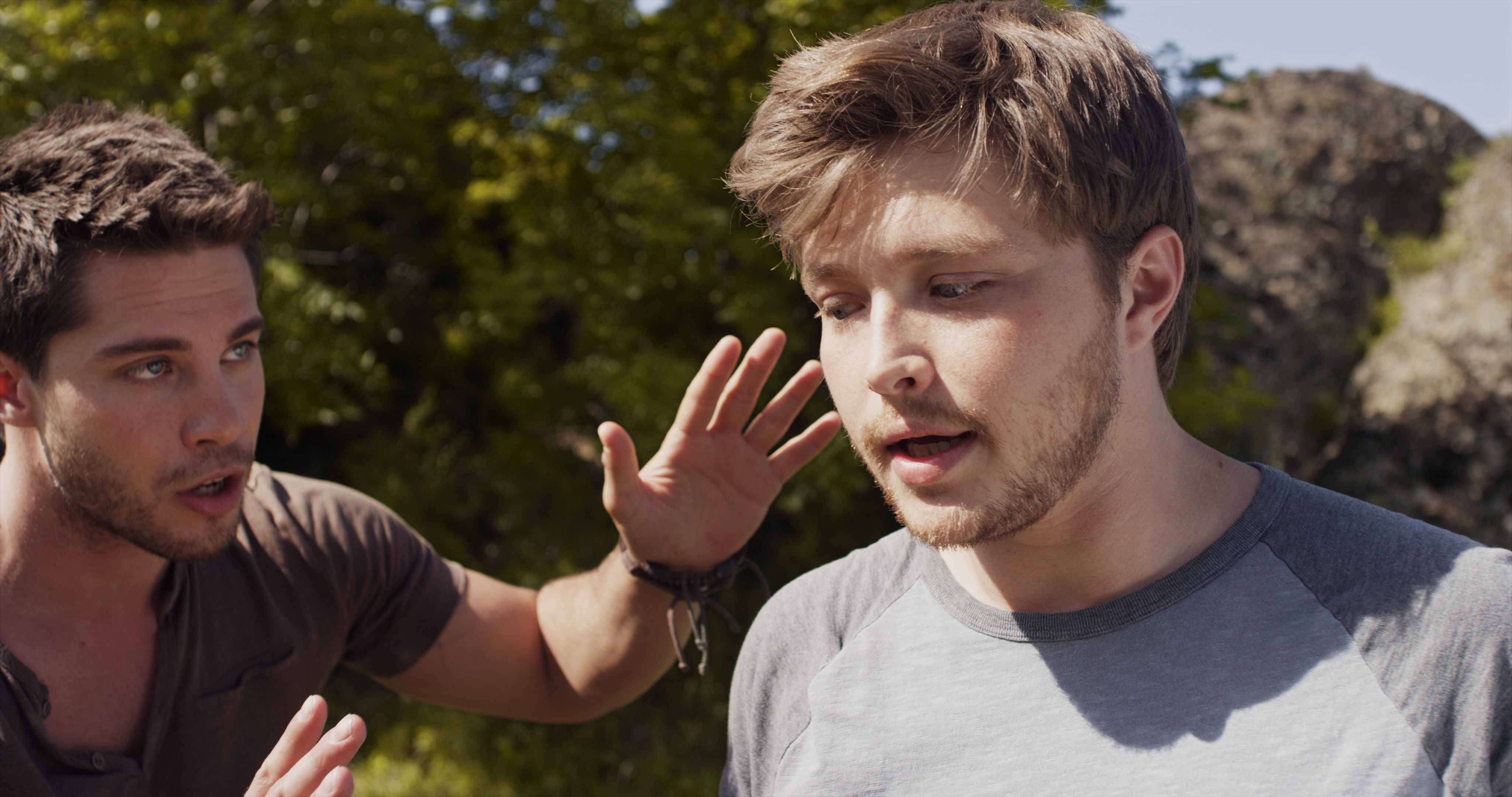
AOTD: Sterling Knight and Spencer Locke both give excellent performances that evolve over the course of the film. Can you tell us a bit about how you cast the American parts in the movie, and what work you did with them in preparation?

LB: Casting happened over skype, long distance.  It really makes it harder, but you see, you know when the actor is right by just speaking to them.  I wish I was there in person, but today's technologies give you all the tools you need. The fact that the actors perform so well confirms that theory.  I think both are great, I think Dean Geyer is great as well. 

As for preparation, I had the actors arrive to Georgia only a week before the shoot, and we did rehearsals.  I realised that we did not have time to prepare for the role more, so I trusted the instinct of all of us.  The situation helped, because in the story they are tourists and they really were tourists in Georgia.  So then we followed the story.

AOTD: Shooting the rape scene in the movie surely must have been an uncomfortable, emotional, possibly traumatic experience not only for Spencer but also for Kote as her assailant. What was the vibe like on the set that day and did it impact on your directorial approach with the actors?

LB: It was much more than I could have imagined.  I will never forget, when we did the first take, as Ilya's character did not even start the rape, he was dragging Alicia and screaming and yelling, being violent preparing for his act.  It was as uncomfortable as real assault.  We see violence in the movies, we don't even consider what it can be in real life.

When you are present at that moment, your body responds to it in a very stressful way.  I can't even imagine what actors can feel.

As for my approach, nothing changes.  I did the rape scenes exactly the same way I approached other scenes.  I think that should not matter, you aim for realistic results.  It's just that, you need to show actors that you are there for them.  You need to show that on any scene, but this kind of scene require more attention.  Actors need to know how it works out.  They can become cautious, if you don't show support, and if they lose trust in you.

AOTD: Your screenwriter is Adrian Colussi whose previous work has been in lightweight TV comedy. It would be a massive understatement to say Landmine Goes Click represents a departure. Can you tell us a little bit about how the script landed in your hands and what input, if any, you had?

LB: I met Adrian at workshop with Judith Weston in LA.  We became friends.  He is a very special guy, a great collaborator and high class professional.  We write together.  I mean he does the writing, but we come up with the story together. 

Adrian is Canadian.  I live in Georgia.  The country Georgia, not the state.  And my company has invited Adrian to Georgia to write scripts for our projects.  He has arrived for 3 months, but stayed in Georgia for over a year.  He even got married to a Georgian girl.   That's how we wrote the script for Landmine Goes Click.  We teach each other a lot, I think we are a great team.  I think I am not going to do anything without him, if he will feel like this too of course.  We do the story together, and then he does the screenplay.  

AOTD: You have chosen to go down the route of self-distribution. What prompted that decision and how is it working out for you?

LB: That really is a long story.  But I started a blog which is where your readers can see the whole story.  I think filmmakers will benefit from joining the conversation there.  But the simple idea is that, indie filmmakers I think need to convert into indie distributors, because that is the era that we are entering. 

AOTD: Sounds like something worth encouraging. 'Landmine Goes Click' played the Fantasporto Festival earlier this year with you in attendance where it won the Audience Jury Award and was nominated for best film. What was that experience like and, other than the accolades, did you gain anything valuable from attending he festival as a film-maker?

LB: Fantasporto was the first festival Landmine Goes Click played.  Actually, it was first festival that i have attended as a filmmaker in selection.  I did not know what to expect, especially the award.  Later our film was awarded on second festival, Fantafestival as well, and now I hope for more wins, it feels good, but at Fantasporto I did not know what would it feel like to be awarded.  And it felt great.

I met other filmmakers, that was the most important part.  I became friends with some of them.  I think being part of something is important, not the win, despite of how it feels, that is not a goal.  Sharing with other filmmakers is what it is all about.

AOTD: The final act of the movie and especially the closing scene really shook me up. Without spoilers can you explain to what extent was the ending instrumental in your wanting to make this movie and what kind of reaction did it get from the audience at Fantasporto?

LB: The closing scene is what this film is about for me.  You see, Landmine Goes Click falls under the genre of rape & revenge.  This is exploitation genre.  It exploits the desire of the audience to punish the villain for the sin he has committed.  The audience is so drawn to this revenge, in movies like "I spit on your grave",  they enjoy horrible tortures performed on the screen.  And I think this is not right.  I wanted to slap the audience for that. 

That's how the audience at Fantasporto, and any other audience reacts to it.  They don't like to be slapped, but I think it reminds them, that they are human.  I hope it does. 

AOTD: I noticed that your name is attached to an upcoming movie called 'She, Who Killed Us All' which will see you work again with your '247°F' co-director Beqa Jguburia. The poster and the tagline alone have me interested. Can you tell us a little bit about this project?

LB: I don't know if that project is still happening to be honest.  And at the same time, I think I will have something much more interesting to offer the audience.  I recently had anxiety issues, it opened up whole new world to me.  World of stress and recovery, world of fear and calm, world of wisdom and ignorance.  Hence, my upcoming project is going to be about that. 

AOTD: Are there any directors whose work you particularly respect and who have had an influence on your approach to film-making?

LB: I respect all great films, and don't like to admire particular filmmakers.  I like to have my mind free from authorities, in filmmaking and in life.  I want to have myself free even from my own "past self", who was fascinated by a certain film in past.  I want it to leave that impression right there, in past as I watched it and then let it go.  I think that is the only way to lead your creativity, and actually live your life. 

But Birdman was the film I could not get out of my head since I watched it.  Can't wait for the new film coming from Iñárritu, but I don't think this is forever.  I will not call that influence.

AOTD: Landmine Goes Click is screening at Frightfest in London next month. Do you have a message for the audience?

LB: Yes.  I want to hear your opinion, please be active, vote, review on your favorite site.  That's how you can support us, the filmmakers.  And thanks for watching my film.  Hope to be there with you.

AOTD: Just want to finish by thanking you for taking the time to answer my questions.  Hope you enjoy Frightfest if you make it.  I know that Frightfest is going to enjoy Landmine Goes Click.

Tuesday, 28 July 2015

Frightfest London 2015: Pavel Khvaleev Interview


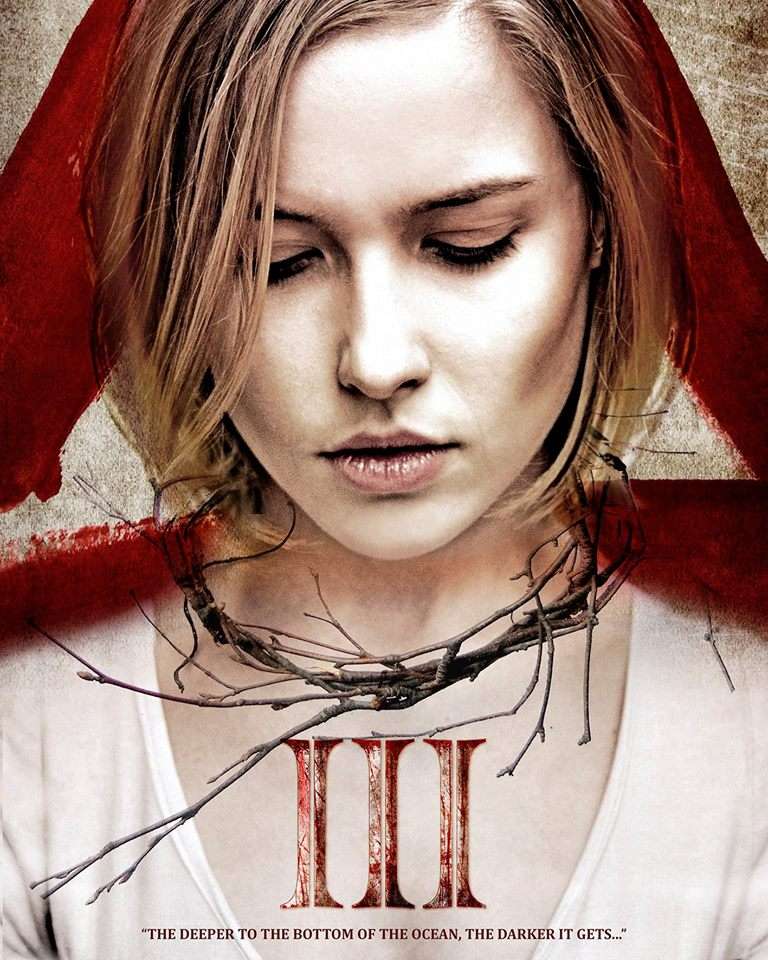
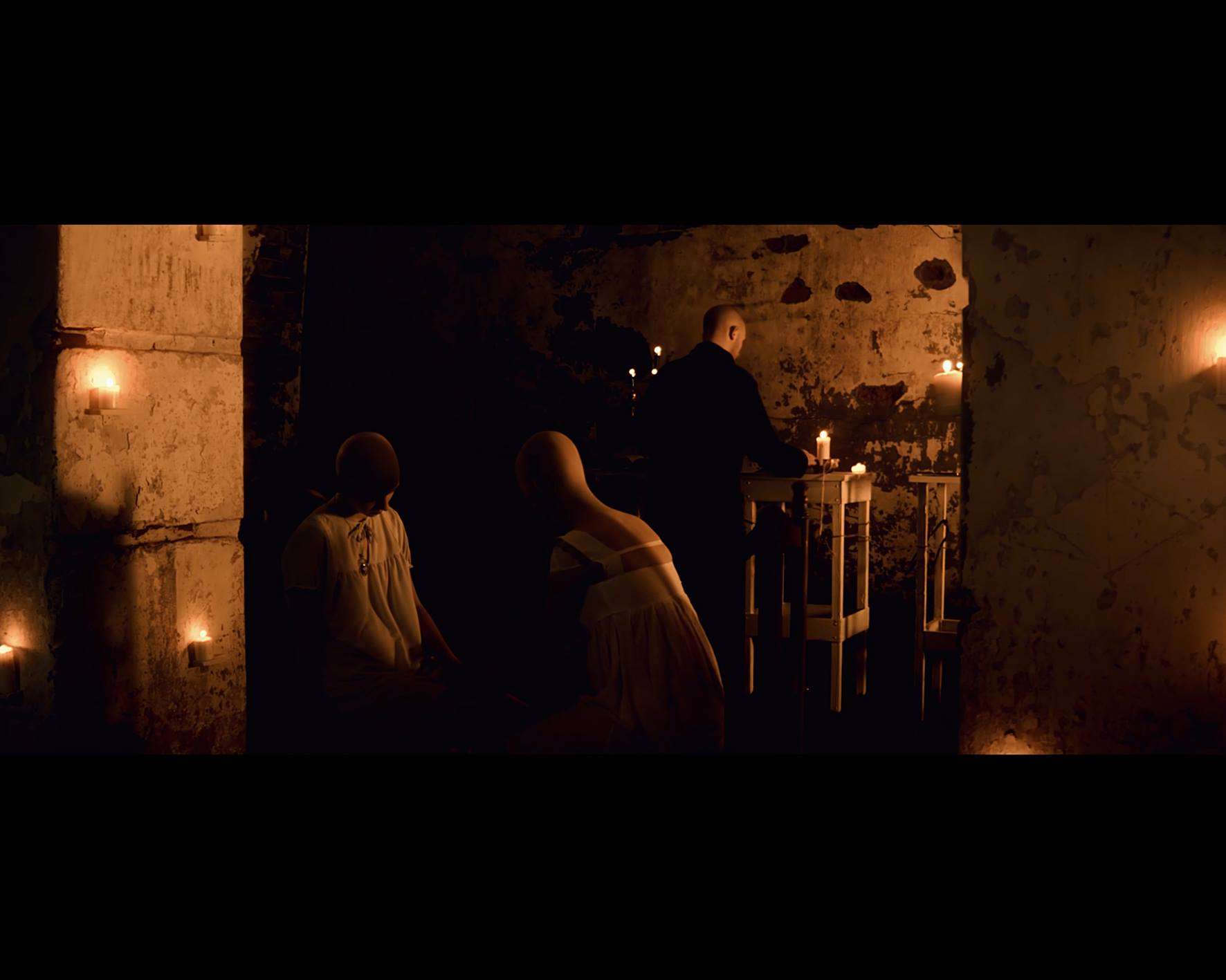
Imagine if Andrei Tartovsky had invented a time machine, travelled from the 1970's to the mid-Noughties and directed Silent Hill. That accurately sums up the thoughts that were going through my head as I settled into Russian director Pavel Khvaleev's visually haunting, dreamlike directorial debut III.  I'll say no more about the movie as I will be publishing a review after the dust settles on this year's Frightfest.  What I will say though is that it will look stunning on the big screen.  Pavel was kind enough to not only arrange access to a screener but also agreed to answer some questions.  Here's how that went.

AOTD: Tell us a little bit about your experience shooting III. How many days did you shoot for? Were there any obstacles or did it all go smoothly?

PK: For me, shooting film III was a kind of experiment. First of all, I used only my personal money resources and finances, without any involvement of outside investors. Secondly, our entire team, including actors, made a feature film debut. The most difficult and memorable day of shooting we spent in the caves of Ichalkovsky Bor (pinewood), where the temperature didn’t exceed 0 degrees Celsius, while above the ground it was 27 °C.

As for pre-production, the storyboard is one of the most difficult stages for me, as you have to recreate and replay every second of the whole movie in your head. You need to play the role of each character yourself to feel maximum emotionality and space of the scene imagined in your head, before arranging and sketching it out on paper. The storyboard is a must if you work in a team. It allows you to stick to a clear shooting plan, but at the same time you can take the liberty of improvising, bearing in mind the key plans.

The shooting itself was divided into three parts. The first part started in Russia in July 2013, where more than half of the film was shot during the two months, including all the complicated scenes with monsters. By the way, for one of the scenes we had to wake up every morning at 5am hoping to catch the morning fog and have time to take a long shot of the forest from the bridge. The second part was in winter and lasted only for a couple of days, as we needed a lot of snow and a thick layer of ice to recreate the endless white expanse, where the heroine was walking. The third and, probably, the funniest for our crew filming part took place in Germany in May 2014, where we were shooting for about two weeks, following a very busy shooting schedule.

AOTD: The movie was shot on a very low budget of 15,000 Euros. How did you go about gathering the finances to make the movie and what challenges did the micro-budget present to you as a film-maker?

PK: Due to the limited budget, we were constantly forced to check with the cost estimate and, probably, make some sacrifices to the shooting process. But even this did not prevent us from going to Germany with the whole crew to continue exterior shooting.

Of course, the costs were saved since all postproduction, including scoring and music writing, was made by me. Thus, it reduced possible expenses from the film budget by additional 2-3 salaries. Although, every member of our crew was working out of pure enthusiasm, without any remunerations. Together with my brother, we spent about 3 months of studio time on writing film soundtracks. With more than a 10-year experience in creating and releasing dance electronic music under the name of Moonbeam, the soundtracks for film III became a real styles experiment for us. We used a lot of live instruments together with electronic analog synthesizers. The only pre-written track was Reptile’s Head by Loolacoma project, which can be heard during the end credits. The second stage of working on sound brought us some difficulties, as after film editing and colour correction we had 80 minutes of absolutely silent film. We didn’t record clear sound during the shooting, so we had to sound every rustle, step, or noise – in short, everything that happens on the screen for 80 minutes. By the way, just after the film’s launch we are planning to release a special album of soundtracks III by Moonbeam.

AOTD: That's very cool. I loved the soundtrack so I'll keep an eye out for that. None of the three principal actors in III had any prior acting experience. Tell us a little about how you went about casting the movie.

PK: There is not a single professional among the cast. With our budget we were not ready to invite professional actors. On the other hand, this particular circumstance played in our favour, allowing us to capture natural emotions on camera. As our actors, being not used to work on camera, played themselves.

AOTD: Polina Davydova is a striking onscreen presence and has the most challenging role in the movie. Did she bring anything to her performance that you didn't anticipate?

PV: We did not expect much, as we knew it would be difficult for Polina, since she did not have any acting education and experience. But, of course, she has talent which we’ve tried to reveal on the set. Both girls, Polina and Lyuba, proved to be very hardy, as some scenes of the film were shot in winter at −28 °C, in the forest with hungry mosquitoes, or in the rain. Everyone behaved themselves very professionally and endured all the hardships of nature and the script.

AOTD: There were quite a few people involved in writing the story. Can you tell us something about the gestation of the script? Did it change at all during the course of filming or arrive on screen mostly intact?

PV: The synopsis was developed by three people: Evgenia Mustafina, Oleg Mustafin, and Alexandra Khvaleeva. During discussions of the future film, they exchanged ideas, rejecting unnecessary stories and events, and keeping only the most interesting stuff. When the overall picture began to emerge, Alexandra proceeded with the main narrative part.

Up to the end of work on the film, we’ve been correcting the script, for example, adjusting Polina’s voiceover.

AOTD: III was shot partly in your home country of Russia and partly in Germany. The locations you chose in both countries are very striking and lend much to the movie’s atmosphere. How did you go about scouting/choosing the locations and why did you decide to shoot part of the movie in another country?

PV: Thank you. Well, the producer of “III” Frank Ellrich is a good friend of mine and he lives in Germany. During a visit in Frankfurt, where he lives, he took me and my wife Sasha to Marburg, the city where he was born.

We instantly loved the dark and historical atmosphere of that old place. That day it was foggy and rainy and Frank always apologized about the bad weather. But I only smiled and said: “Do you know what? This place is the perfect place to shoot parts of the movie III down here.” After this Frank stopped apologizing haha. In April last year we went there with a film crew of 10 people and Frank took us to several places he scouted due to the description of my storyboard. In ten days we caught all scenes we had especially prepared for that.

AOTD: Is the horror genre one you feel particularly drawn to and if so why?

Answer 7: It’s hard to say, because in general I am interested in many various genres, such as Thrillers, Science Fiction or Fantasy. But my music and especially my videos I created for my music project Moonbean contained very often horror or mystic elements. I feel somehow very connected to it. So all this experience I gathered at my work for the music videos finally lead me to the idea of a full horror movie.

AOTD: III is your debut as a director. Are there any past masters of horror cinema, or just cinema in general, whose work particularly inspired you?

PV: At the current moment I’m inspired, probably, just like other viewers around the world, by new strikingly good TV series, such as Black Mirror, Les Revenants (The Returned), True Detective…

AOTD: I’m not aware of many Russian horror movies appearing of late. What is the current state of horror cinema and film-making in general in your home country?

PV:  Russian horror cinema market is very poor, there are only few movies, and they are all the same. That’s why we decided not to make a clichéd copy of such Hollywood bestsellers as Insidious, Mirrors, and Paranormal Activity. We decided to choose a more complex narrative model that would involve not only people, but also the history. For example, just a few people in our country know that Siberian shamanism was linked to Orthodoxy, as well as to Catholicism in Europe. Thus, it is more than a typical horror movie.

We also want to say that touching religion in our country is not particularly welcomed by the Orthodox Church, which in its turn caused some difficulties at this stage. Namely, at Movement festival in Russia, our film was included into the non-competition program and, what’s more, the film could be shown only after 12pm. Other festival films as a rule are only socially oriented.

AOTD: III is screening at Frightfest in London next month. Do you have a message for the audience?

PV: Dear sophisticated viewers of Frightfest Festival, you may find our film not so bloody or dynamic. But that was not our purpose. The main thing is to feel the atmosphere and melancholy of Russian people and their environment. And most importantly, to believe that something bigger and deeper is hidden beyond the existing knowledge about diseases.

AOTD: I just want to finish by thanking Pavel for taking the time to provide such thoughtful and interesting answers to our questions.  Here's the official trailer for III.


Wednesday, 15 July 2015

Frightfest London 2015: John Fallon Interview


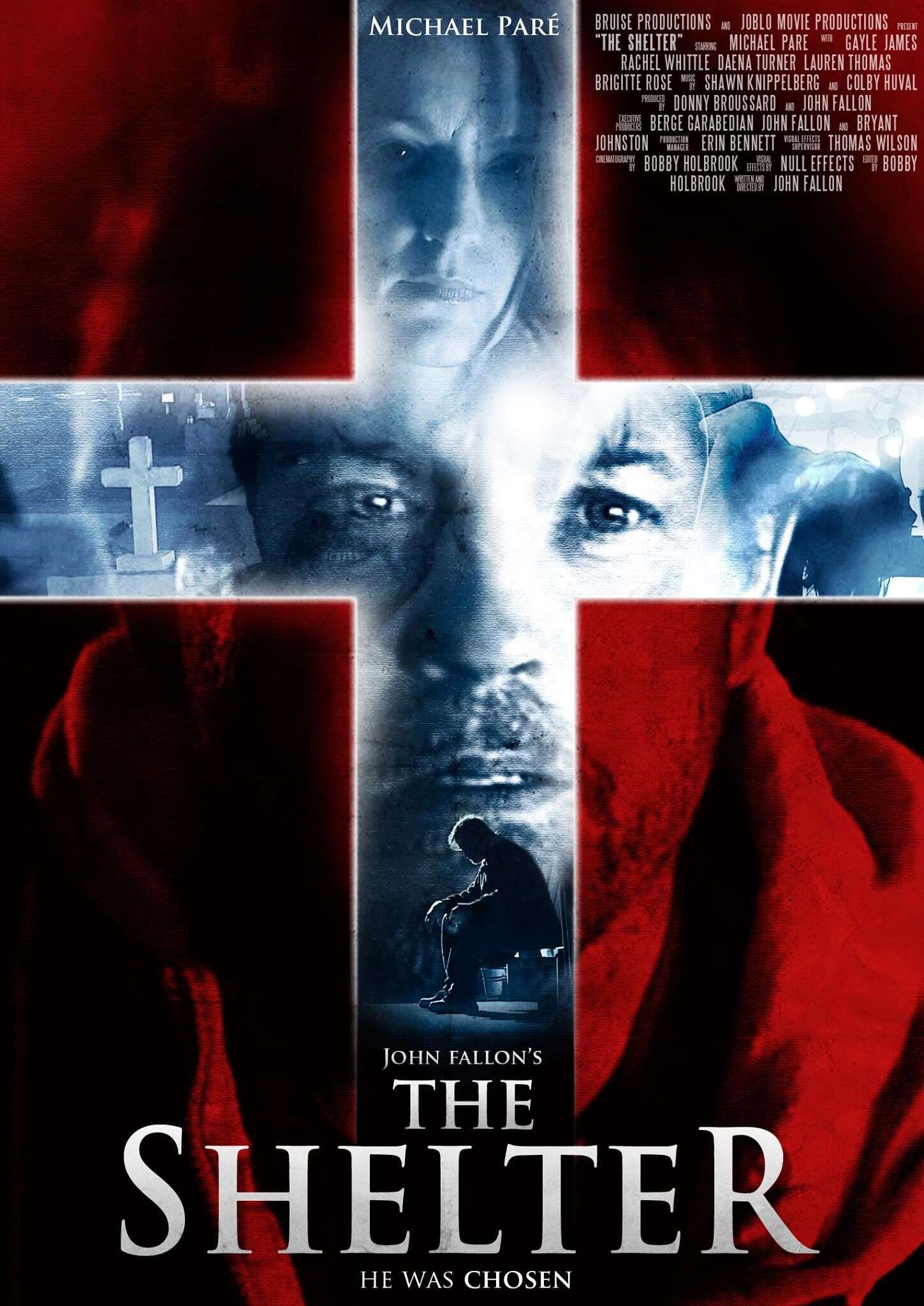
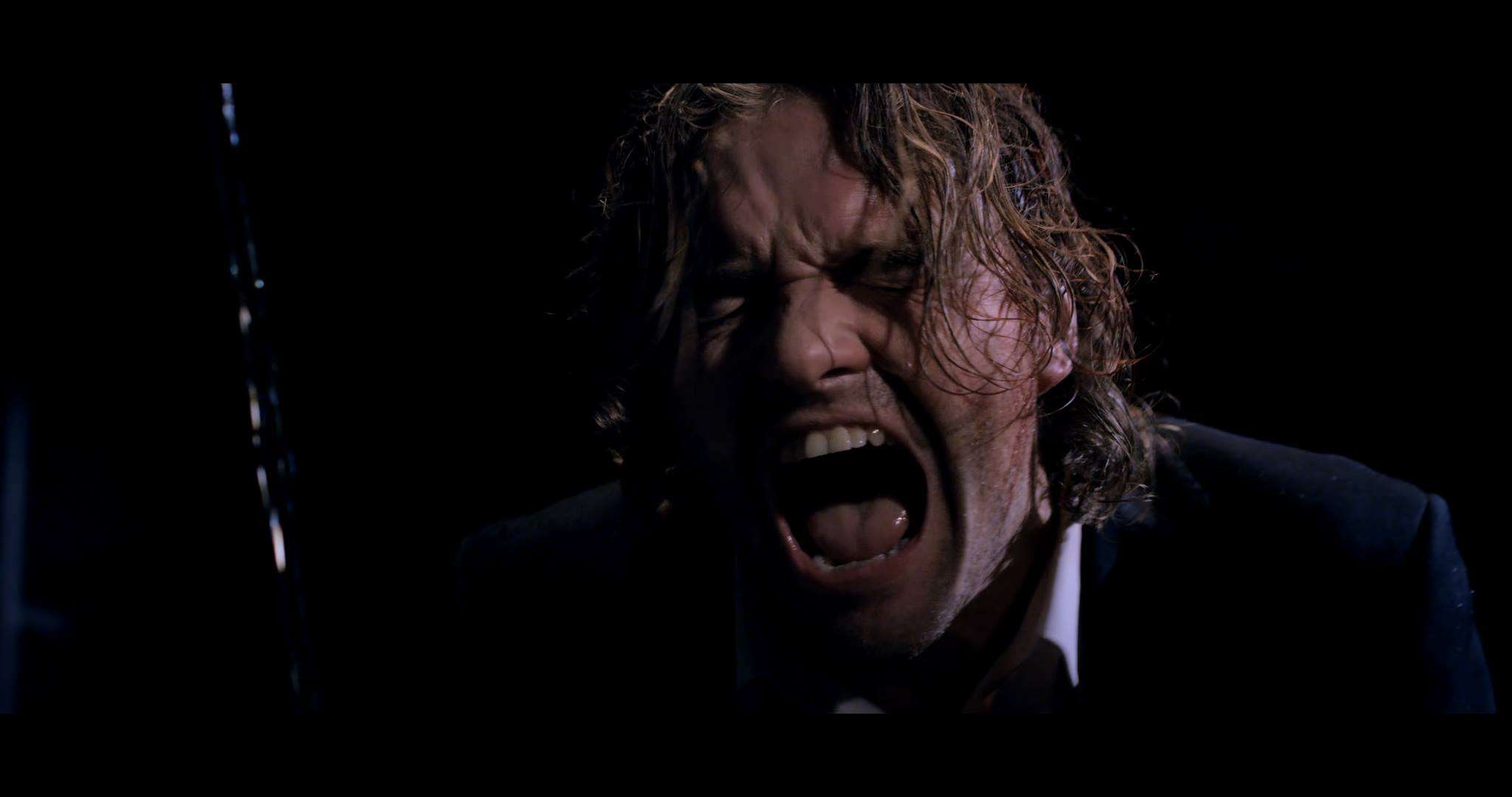
John Fallon is better known as the dude responsible for the Arrow in the Head website which, with its focus on horror movies including daily news updates, reviews, and commentary, was a direct and significant inspiration in my decision to write about genre cinema. This fact alone galvanised my interest in The Shelter while at the same time making me a tiny bit nervous about watching it. At the end of the day I needn't have been worried. It's a fine debut and more than a bit surprising in terms of the particular corner of horror it occupies. Although it fits comfortably within the boundaries of the genre it is as much a drama, which examines one man's battle with the sins of the past, as it is a fright flick. Which is not a bad thing as it turns out. It's a strong debut, full of atmosphere and featuring a career best performance by Michael Pare, with a lot to offer horror freaks and geeks. I'm grateful to John for letting me view the movie and also for agreeing to answer some questions. And without any further ado...here's the interview.

AOTD: Tell us about your experience with 'The Shelter'. How many days did you shoot for? Did the script change at all during the shoot? Were there any unexpected challenges or did it all go smoothly?

JF: The 15 day shoot was one of the smoothest I had ever experienced and trust me I was as surprised as anybody else about that. But I was well surrounded for the most part and although we had a small crew; we were a well oiled machine. Looking back; we had some struggles with continuity that took some time/energy to resolve and we wound up shooting an exterior scene on the coldest night Louisiana had in like 25 years; the crew was freezing hence I had to cut the night short and shoot the rest on another night.

But the obstacle that left the biggest impression on me came the day before we started shooting. There were snow storms in North America at the time and Michael Pare’s flight got cancelled. So co-producer Donny Broussard and I were on the phones for hours trying to get Pare another flight and get him down in Louisiana on time for the first day of shooting being that I couldn’t financially afford to push the shoot back. It was a fiasco. In a way that potent sucker punch just before shooting was a good thing, because once FINALLY resolved, all of the stress that I could’ve felt in terms of the start of production had been purged out of me. So I stepped on set come the first day feeling very relaxed; which was a good thing. Story wise; although our varied environments resulted in new minor story elements and that I had to consolidate some scenes here and there in the name of time/money – the script didn’t change much from page to screen. 

AOTD: I understand that you and Michael Pare have been friends for a number of years. When you were writing the script for 'The Shelter' was it with him in mind as the central character and what were the qualities you saw in him as an actor that made you cast him in the role?

JF: Mike and I met through our mutual friend Eric Red and spent time together in Budapest during the shooting for Red’s 100 Feet. When I wrote the script, the character of Thomas looked like Mike in my mind but to be honest I didn’t think we’d get him. He’s a busy guy. So, I was looking for somebody like Michael Pare, until co producer Donny Broussard convinced me to just send Mike the script and see what happens.

Mike loved it, wanted in, we made an agreement and that was that on that. The role of Thomas required an actor that had raw magnetism, somebody the audience wanted to watch being that A- The role was fairly un-sympathetic on paper and B- Thomas was pretty much in every frame of the film. And Michael Pare had all that we needed for the role and then some.

AOTD: What lessons did you learn as a film-maker during the writing, filming and post-production of 'The Shelter' that you feel you will benefit from when it comes time to direct your next feature?

JF: Ha! I could write a novel in terms of what I learned and am still learning throughout every stage of making this film. Hence, I’ll just say that although I didn’t expect my work on The Shelter to end with Post Production; nothing could have prepared me for the battle that lay ahead. Every step forward has and still demands much effort and most of them also cost money. Let me put it this way; The Shelter has been my full time job since January 2014 and I’m still waiting for my first paycheck. And I won’t even get into the emotional roller coaster ride this endeavor has been for me thus far. I’m definitely stronger and wiser for it. With that said; if I had to do it all over again...I would in a split second.

AOTD: 'The Shelter' is more of a drama than the kind of full on horror movie experience people may have anticipated given your background. Was this as much of a surprise to you as it may be to the movie's audience or did you set out to subvert expectations?

JF: I had no strategy when I decided to make The Shelter; I didn’t want or even think of subverting anything and I wasn’t trying to appeal or not appeal to anybody. It was a very pure project. The easiest way I can explain it is: for better and for worse it’s the movie that wanted to get made.

AOTD: You have had acting roles in quite a few movies over the course of the last 15 years. Which performances are you most proud of and did you take the opportunity to pick up skills that would serve you well when it came time to step behind the camera yourself?

JF: I’m very proud of my performance in Dead Shadows and I had a lot of fun doing American Muscle. I’ve picked up knowledge on every set that I have been on and I doubt that will ever change. There’s always something new to learn! I feel that having an acting background and understanding actors and their process did help me when directing The Shelter and will be a valuable asset moving forward.

AOTD: The indie horror scene has been spitting out a lot of great movies for the last several years. What movies have particularly impressed you and why?

JF: Adam Wingard’s THE GUEST with Dan Stevens floored me. It sported a stellar cast, an intriguing mystery; stand out 80's like music/score, bleak humor and potent moments of extreme violence! I loved every second of that film!

AOTD: I too loved THE GUEST. Dan Stevens was inspired casting and the soundtrack was one of the best of 2014. What do you think of the current state of mainstream horror?

JF: For every five Paranormal Activity-like flick I have to endure, there’s one Sinister I can relish. I have mixed feelings about current Studio horror and find more fulfillments within the Indie scene.

AOTD: I've yet to see SINISTER. I really need to fix that. Are there any established directors whose work you particularly respect and who have had an influence on your approach to film-making?

JF: Mel Gibson, David Lynch, Clint Eastwood, Stanley Kubrick and Roman Polanski would all be influences of mine. I REALLY want to work with or for Mel Gibson in the near future. I actually sent him a copy of The Shelter. You don’t get if you don’t try! 

AOTD: Some very fine choices there. Moving forward do you intend to juggle directing with acting and what does your immediate future hold in regard to both?

JF: If a solid acting role falls in my lap, I’ll take it, but right now I am not pursing that, my energy is focused on directing. I am already in the process of setting up my next film. Something with a bigger budget and that is much more mainstream. We’re moving in the right direction but I will keep details to myself until the money is locked. 

AOTD: 'The Shelter' is screening at Frightfest in London next month. Do you have a message for the audience? 

JF: What you get out of The Shelter will have a lot to do with who you are, how you were raised and the nature of your spirituality... or lack of. I hope you enjoy it, and if you don’t, that’s okay too. It’s not a film for everybody, but it may be for you...

AOTD: Thanks again for the interview. I hope you enjoy the Frightfest experience. It's a fantastic event.


Wednesday, 8 July 2015

Frightfest London 2015: Mark Murphy Interview


Here we go with the start of our Frightfest 2015 coverage. We're kicking off in fine style with an interview with Mark Murphy, director of Awaiting, a claustrophobic tale of terror set in the remote English countryside. The movie stars mega-talented Scottish character actor Tony Curran who delivers a chilling performance in the role of Morris. He's joined by ex-X-Factor contestant Diana Vickers and Rupert Hill who popped up in 2012's Entity. I'll be running a review of Awaiting after its Frightfest screening and would like to thank Mark for taking the time to answer my questions.


AOTD: Tell us a little bit about your experience shooting Awaiting. How many days did you shoot for? Did the script change at all during the shoot? Were there any disasters or did it all go smoothly? 

MM: We shot for four weeks up in Yorkshire, in the summer, 2 weeks on location, 2 weeks in the studio. Shooting in the studio allowed us to fly through the scenes, but shooting in the forest, in the pleasant weather was great fun. Usually, if it’s a happy shoot there’s aways a great comradery amongst film crews, and this is was exactly that, we had a lot of fun, and a lot beers in the evening. No major disasters, apart from nearly losing the main location a few days before shooting was due to begin, but after I sent a few saucy photos of myself, everyone was happy, and we were back on track. I think we were fairly lucky, the Gods must have been smiling upon us.   

AOTD: Awaiting is for much of its runtime a chamber piece. Did you write the script with what was presumably a very low budget in mind? 

MM: A couple of reasons really, it definitely helped with the budget by keeping the locations minimal, although that being said we had several sets built, which became an expense, but also the heart of the film is about isolation, for all three of the characters, Morris, being a social outcast, Lauren not having anyone in her life beyond Morris, and Jake who gets taken from the life he knows and trapped in the grisly world of Morris and Lauren. 

AOTD: Tony Curran is a well-established character actor while Diana Vickers is obviously better known as a pop singer. It’s an interesting mix. Tell us a little bit about the casting process. What were you looking for and did the cast you ended up with mirror your expectations? 

MM: We’ve got three different generations/sources of actors for sure, and all brought unique and valuable elements to the film. Tony, as you say, is an established Hollywood actor, having worked with Spielberg, Scott, Mann, etc. etc. and he brings a wealth of experience and talent, film is in his blood, and he brought Morris to life as a fantastically charming yet nightmarish character. Rupert has years of TV experience, having been in Coronation Street for six years, and his approach was slightly different to Tony’s, more analytical of the character, and worked hard to get under the skin of Jake. Diana, of course was in X Factor, and had her music career, but she also starred on stage in the West End in Little Voice, so had the acting chops on her. When she auditioned, I wasn’t aware of her singing career, not being an X Factor fan, but my mum was delighted when she found out. All three made the characters their own, and I’m delighted with what they brought to the party. 

AOTD: There’s a particular scene of self-mutilation in Awaiting that I don't want to spoil. I'm sure you'll know which scene I'm referring to. Did you research whether the method used by the character to achieve his grisly goal would actually work or did you simply think, “Fuck it…it’ll look cool.” 

MM: Honestly, a bit of both. I wrote it because I felt it was an imaginative, and original plot twist, but when it came to the prosthetics, we did have to research how and if it would work. I wouldn’t suggest anyone giving it a go, to try and prove me wrong.

AOTD: Tony Curran handles the accent very well and is a truly terrifying and convincing psychopath. Did he bring any of his own ideas to the table?

MM: Well it helped that Tony’s a terrifying and convincing psychopath in real life, so he was able to bring that personal experience to the table… I jest, but Tony did ring me up out of the blue from Los Angeles, a week or two before shooting started. I didn’t recognise the number and he was testing out his Morris persona, it scared the shit out of me, it took a few moments to realise that it was Tony, and not some guy called Morris who I owed money to and wanted to kill me. 

AOTD: Did you ever consider allowing him to keep his native accent? Because surely there’s nothing scarier than a Scottish madman. 

MM: I didn’t want the film to be that scary to be honest, so thought I’d make it less terrifying by keeping him south of the border, seriously, the scariest film character of all time has to be Begbie from Trainspotting. We did play around with the accent, but I wanted it to feel like this is where Tony had grown up, and if we kept it Scottish, then Diana would have to go with it as well, now that would have been scary, a Blackburn girl trying on the Scottish accent. Actually my mother’s family is Scottish, so there were definitely a few inspiring relatives I could base Morris on. 

AOTD: Awaiting isn't your first foray into the horror genre.  Is it a genre you feel particularly drawn to and if so why? 

MM: I don’t think so, to be honest, I feel I let the side down with my first film, The Crypt, I’m definitely very proud of this one though, I’m not genre-centric, the film I’m shooting this summer is a comedy. The one after that, hopefully, a war drama, but who knows, I’ve still got a couple of interesting horror scripts on the table, so may try tackling it again soon. For me I’m more led by the story, if it’s engaging with interesting characters, less so by the genre.

AOTD: Are there any past masters of horror cinema, or just cinema in general, whose work you particularly respect and who have had an influence on your approach to film-making? 

MM: For sure, I’d say my favourite director is David Fincher, and Seven was hugely influential for me making this film. Silence of the Lambs of course is another one, I’d be lying if I said I didn’t want Morris to be as chilling as Hannibal Lector, and probably my favourite film of all time is Jaws. I once met David Fincher when Girl With the Dragon Tattoo came out. I told him that Seven was one of my favourite films, he replied; “I hope the police know where you are at all times.” Happy times :) 

AOTD: Are you going to stick with horror or are there other genres you would like to try and would you be comfortable directing from someone else’s script should the opportunity present itself? 

MM: As with the earlier response, I love horror films, but wouldn’t pin myself down to one specific genre, I love films and I love film making, and if I can get to experiment with as many genres as possible I’ll be a hugely happy and lucky guy. Maybe not musicals though. For sure I’d be happy to work on other people’s scripts, although I’d definitely ending up re-stirring the pot to try and put my signature on it. 

AOTD: Awaiting is screening at Frightfest in London next month. Do you have a message for the audience? 

MM: Love me. No, just that I hope you enjoy the film and that it rattles around in your head for a day or two after. If you don’t like it, I apologise profusely and promise my next one will be better.

Friday, 22 August 2014

Frightfest London 2014 - Jessica Cameron Interview


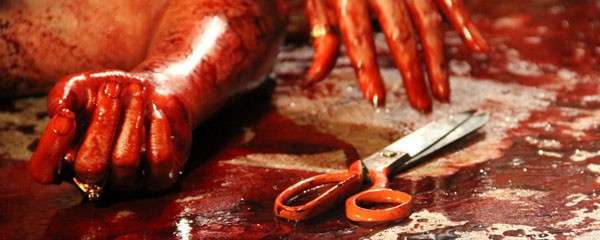
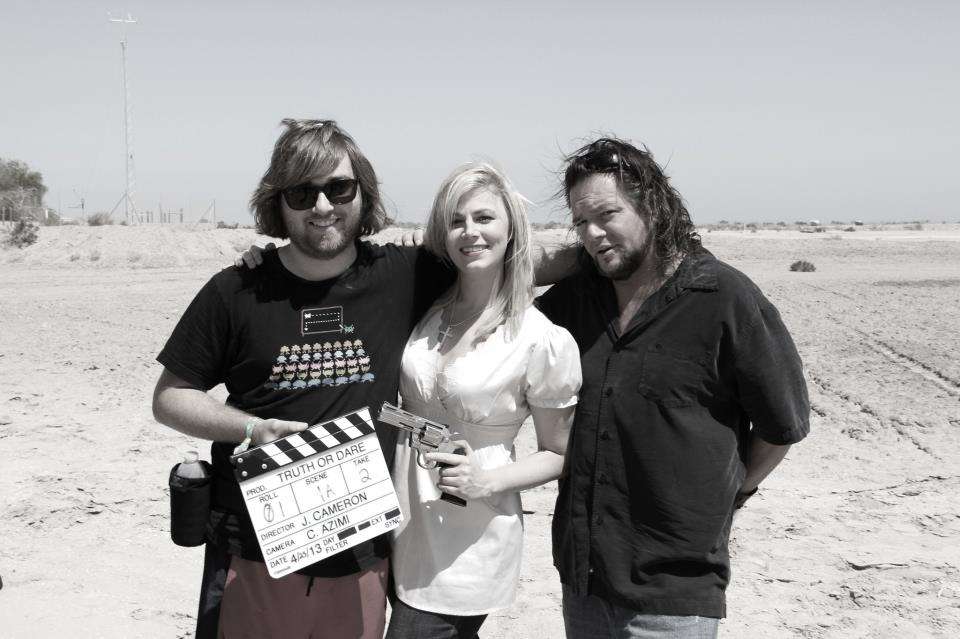
When I approached Jessica Cameron to request access to a screener of Truth & Dare I honestly didn't know what to expect of the movie. Female horror director's are few and far between and female horror directors who are willing to give the guys a run for the money in terms of bringing the nasty are in even shorter supply. So it was with dark delight that I discovered that Truth or Dare doesn't just deliver in terms of shocks but at times surpasses most of its peers without breaking a sweat. This is a movie that doesn't break taboos so much as it tears them into a bloody, ruptured mess, sets fire to the remains then pisses on the ashes while all the time laughing like a maniac. Oh...and it's a lot of fun at the same time. Anyway...here's how the interview went.

AOTD: Did you see Truth or Dare as an opportunity to prove that female horror directors can go toe to toe with the gents when it comes to shock factor?

JC: I did. I actually didn't intend to direct this when my co-writer Jon Higgins and I drafted the script. We originally went out to 6 indie directors and I was surprised that it was the male directors who had the biggest problems with the content. I didn't want to change the story or "water it down" (cause I hate that) and Devanny Pinn was actually the first to tell me that I should direct it. After I thought about it I realized that I was the only one who WANTED to tell this story as it was written in all its glorious, violent detail.

AOTD: You co-wrote the script with Jonathan Scott Higgins and you're working with him again on Mania. How does the collaborative process work for you guys?

JC: With Truth Or Dare we actually worked a lot closer to each other. With Mania I have given notes but its been a very different process. Jon and I have both been working on so many other projects this year that he really took to the general concept and went nuts with it. He's a great writer and I am much more of an idea kinda gal. I have these cool concepts and ideas but without Jon to connect the dots I would be lost. 

AOTD: Tell us a little bit about the casting process. How did you guys go about filling the roles and what were you looking for in your actors besides the ability to convincingly deliver agonising screams?

JC: When Jon and I were writing it we wrote it with a few people in mind. Luckily for us they all loved the script and wanted to do the film.The few remaining roles we cast via auditions. We intentionally tried to write a script with as few actors as possible. When your making a low budget feature film keeping the cast small is crucial. We held in person auditions as well as accepting video ones. 

I get asked by actors all the time how they can submit to my films but the reality is I cast who I know, who I think is talented, will be a joy on set and promote the film afterwards. The best thing an actor can do is politely email me their headshot and resume, with all their links and then stay involved in my film world. Every time an actor likes the status on my films facebook page its a reminder that they are engaged and involved, its the polite way to remind me that you are still there.

AOTD: How comfortable (or uncomfortable) were they with some of the more extreme moments?

JC: I tried to be very honest and upfront so that everyone knew  what they were getting into from the start. I think that helped a lot. It's important that everyone from the actors to the crew know what to expect as far as what you are filming. Some of the actors were definitely more comfortable then others but all were very professional about it which is key when filming such delicate scenes. We tried to work at each actors comfort level, work at their speed. I was really smart about casting actors whose personalities would mesh which helped a lot too so that they could bond and as a result like and trust each other in those delicate scenes.


AOTD: What were the main challenges you faced bringing your original vision to the screen intact on what must have been a very tight budget?  Did the shoot go smoothly?

JC: The shoot went pretty smoothly. I am a huge fan of having a plan B and plan C for EVERYTHING and there were certainly times when this was needed. But overall it was pretty smooth. I really focused on getting the best team and one that I felt would work well together. I think that this is crucial when it comes to having a successful shoot. One bad apple really can spoil the whole bunch, so aligning the right team for the right project is crucial!

The biggest challenge was getting the best technical quality without a budget  and limited crew. We shot long hours, worked hard and really  just focused on getting the best quality that we could.

AOTD: Truth or Dare has been hitting the festival circuit pretty hard. How critical do you feel this is to independent film-makers and do you enjoy sitting in a room full of horror geeks and gauging whether they are digging your movie or is it a bit of an ordeal?

JC: I think film festivals are wonderful for creating "noise" for your project and also getting film makers to connect with the horror fans directly. For me its been really encouraging to see their reactions face to face. When you give your everything to a project, and then you get to see people really appreciate it,  it warms your heart.

It is very hectic though to be doing it ALL yourself (or in my case with my producer Jon Higgins). There is just so much to do when it comes to the festival circuit - submitting and filling out all the forms, promoting, attending, marketing, etc. Its a full time job all by itself!

AOTD: Truth or Dare is your feature debut. What do you think you’ve learned from the experience?

JC: I learned so much. First of all the importance of post production - your post team is so important. As an actor you like to believe that you create the character, and though this is true I really got to see how characters and the story line can be adjusted through the magic of editing. I also leaned about when to push back and stick to your guns and when to compromise.

AOTD: The indie horror scene has been jumping for the last several years.  What movies have particularly impressed you and why?

JC - There are so many great indie genre films in the last few years. Some of my favorites include:

American Mary - The Soska's really made a powerful and beautiful film, with strong subtext. Their ability to create these strong female characters who are unlike any we have seen before is impressive.

Excision - Ricky Bates really was able to pull amazing performances out of his cast, and its such a unique story with an ending that even I did not see coming.

You're Next - Adam Wingard and Simon Barret really worked to tell an original take on the classic "home invasion" story line. They characters were all unique and I liked how they incorporated so much into this tight script.

AOTD: Three great choices there. I love them all but especially Excision. What do you think of the current state of mainstream horror?

JC: I think mainstream horror is pretty boring and generic, over all at least. For me the indie horror scene is producing much more original and interesting content. So much of the studio produced films are generic, or repetitive these last few years. The studios are so much more afraid to take a chance with an original story/ cast/ sub-genre/ etc.

I love that the indie scene is where the directors and producers seem to be taking more risks and creating original content.

I am honored to be a part of it!

AOTD: Moving forward do you intend to juggle directing with acting and what does your immediate future hold in regard to both?

JC: You know after "Truth or Dare" I honestly did not think that I would direct again. Its just so much more work, you have to spend years on the same film, etc. Acting is so much easier and quite frankly you get so many more accolades. However I am a sucker for a great story, and as a horror fan I feel that there are stories that are not being told currently in the genre world. So I want to help bring them to life in whatever capacity I can, be it as an actor, producer or director.  
I have announced my next directing gig, "Mania" which is a "Fucked up Lesbian Love Story". I just fell in love with this twisted tale and knew that I was not right to act in it. So I opted to get behind the camera again. Its much more of a character piece, its a cross between two of my favorite films "Thelma and Louise" and "Henry: Portrait of a Serial Killer".

AOTD: Truth or Dare is screening at Frightfest in London this week. Do you guys have a message for the audience?

JC: One of the most important messages I try to get out there is if I can make a movie, anyone with the passion and desire can too. Just get off your ass and do it : )  I mean I did not go to school for film, or acting for that matter and just  put all my time/effort and energy into it and its been an amazing experience. Everyone should follow their dreams, you only get to live this life once!

And of course - beware Youtube stars and their crazed fans.

AOTD: I just want to finish up by saying thanks for taking the time to do this. I think Truth or Dare is going to kick ass at Frightfest and I hope you have a really awesome time there.


Saturday, 9 August 2014

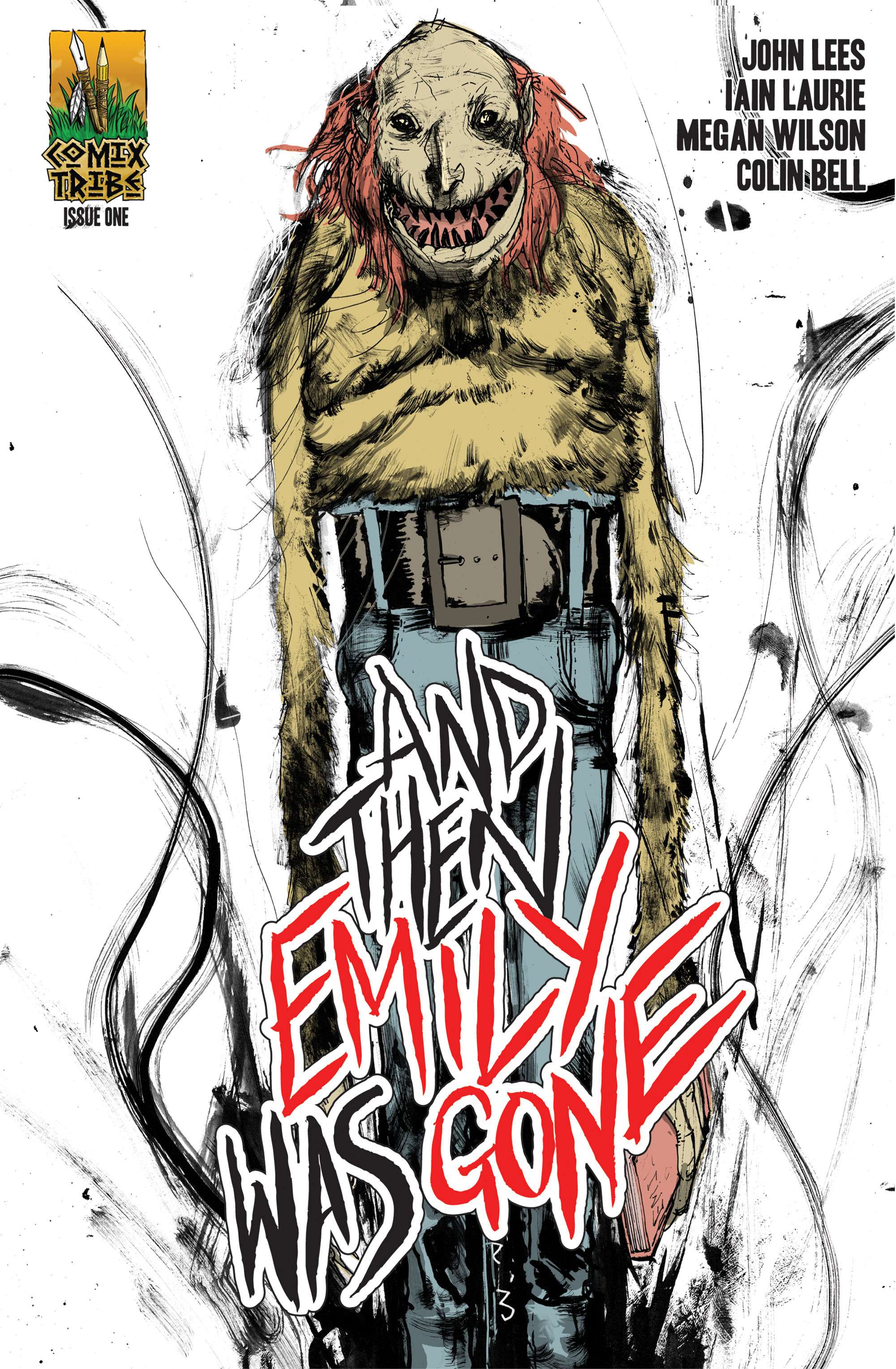
And Then Emily Was Gone - An Interview with John Lees and Iain Laurie

I'm going to refrain from saying much about And Then Emily Was Gone as I've already delivered a five star review of the first three issues in the current issue of Scream Magazine and I fully intend to review the complete saga for Afraid of the Dark when all five issues are in the bag.  What I will say is that it's the kind of comic that comes along only once in a blue moon.  When I cast my eyes over the self published issue #1 some months ago with its wonderfully macabre artwork courtesy of Iain Laurie filtered through the dark imagination of writer John Lees I knew instantly that I was witnessing the birth of something special.  Publisher Comix Tribe evidently agreed and jumped at the opportunity to publish And Then Emily Was Gone.  Issue #1 is now on the shelves (BUY IT!!!) and having been met with universal critical praise and stellar sales I felt it was a good time to approach the creative minds behind this compelling work with some questions. Here's how that went:

AOTD: Tell us a little bit about how AND THEN EMILY WAS GONE came about? Did the idea arrive fully formed or was it something that grew from a small seed into the masterpiece of the macabre I consider it to be?

JOHN: A masterpiece of the macabre!  I like that!  Ideas for stories are weird, as one they are fully formed it does kinda feel like they were always that way, and it's hard to go back and unpick how it all came together.  I'd say the first small seeds came when an anthology project Iain and I had been working on fell through, and we decided to do something together on our own.  Iain sent me a bunch of comic ideas, and I took elements from all of them, mixed and matched them, and jumbled them all into this combined pitch for AND THEN EMILY WAS GONE.  And the story as it is quickly took shape from there as Iain and I riffed off one another and threw ideas back and forth.  It helps that the two of us have similar interests and so draw our inspiration from similar sources.

AOTD: This question goes out to both of you. I'm curious about what inspired EMILY both in terms of story and also in terms of the overall aesthetic.

IAIN: So much... Danish cop shows, TWIN PEAKS, KILL LIST, THE WICKER MAN, European animation. All thrown in the mix.

JOHN: Yeah, the stuff Iain brings up definitely all plays into the influences for the project.  But there are so many influences, I almost feel like I can give a different answer every time someone asks me this question.  You're a fan of horror, Stephen, you'll perhaps remember that "History of Horror" documentary series that aired the BBC a couple of years ago, hosted by Mark Gatiss.  The middle episode - my favourite one, which I've rewatched several times - was called "Home Counties Horror," talking about Hammer Horror and the distinct brand of British horror cinema that sprang up around it, from NIGHT OF THE DEMON to BLOOD ON SATAN'S CLAW to the aforementioned THE WICKER MAN.  That show touched on a very striking notion, that the horror of these films were given more power in their understated Britishness, how everything felt more grounded and closer to the real world than it might in a polished Hollywood production, giving it a more unsettlingly eerie quality.  I definitely imagine AND THEN EMILY WAS GONE sitting comfortably within that brand of "Home Counties Horror."

AOTD: Question for Iain. The artwork in EMILY was originally B&W. How did Megan come on board and what was your initial reaction when you first saw some coloured pages?

IAIN: Originally this was just an experiment for me to see if i could draw a comic book with a proper narrative that was more accessible than my usual stuff. I never expected it to be anything more than a small run small press book. Nick Pitarra, who draws THE MANHATTAN PROJECTS, has been a big supporter of mine so I sent him the pages and he got really excited and hooked us up with Megan and she came on board and that's when things started changing. Her contribution has been epic. She's made my stuff look really professional.  She's a wee genius and I owe her loads.


AOTD: At what point did you guys realise that you had something special with EMILY and tell us a little bit about how ComixTribe came on board?

 IAIN: For me it was when people like Nick Pitarra and Riley Rossmo (who drew the amazing #1 cover) said how much they liked it as they are proper comics people.

 JOHN: For me it was much earlier in the process.... it was when Iain Laurie's pages started hitting my inbox.  I immediately knew this was going to be something very special right from then.  As for ComixTribe coming onboard, I already had a good relationship with them based on them publishing my debut comic, THE STANDARD.  I knew they were dedicated, stand-up guys, and that they produced quality comics.  I believe the germ of the idea that they could publish AND THEN EMILY WAS GONE was first planted at New York Comic Con last year, when  publisher Tyler James kindly offered to let me put some copies of my black-and-white small press edition of AND THEN EMILY WAS GONE #1 on the ComixTribe table, and it ended up being one of the hottest-selling items at the table.  I think that showed that ComixTribe's existing readership was interested in a weird little comic like EMILY, and that something so starkly different from the rest of their output could also perhaps attract a different demographic.  And I knew from my past dealings with them that ComixTribe are an absolute pleasure to work with, so the deal came together quite quickly from there.

AOTD: There's a dark and twisted imagination at work in EMILY both in terms of the narrative and the visuals. It feels like a very singular, cohesive vision. How does the collaborative process work for you guys?

JOHN: Our collaborative process has been pretty interesting.  At the earliest stages of the comic's development, Iain and I talked to each other at length about the story as a whole, hitting the broad strokes of the beginning, middle and end and honing in on who the major characters would be.  As such, AND THEN EMILY WAS GONE is very much both our creation in terms of this world and its narrative.  But from there, once I got to actually writing the script and developing out the plot beats in detail, Iain didn't want to read ahead.  He'd only read the scripts as he was drawing them, I believe so that it felt fresh and he could be more "in the moment" with the scene he was drawing rather than thinking too far ahead.  On my end, with my scripting I tried to tailor my writing to Iain more than I've tailored to any other artist before, trying to work in motifs and imagery that recurs in Iain's work and consciously attempting to create a piece of work which could read as an "Iain Laurie's Greatest Hits" collection for those familiar with his work, while also stretching him and letting him try stuff he's not had the chance to do explore before.  We have a very symbiotic collaborative relationship.

 IAIN: We work on the principal that Johns the screenwriter and I'm the director. I like that as it lets me change things and stuff but I always run it past John. We're lucky in that we have very similar tastes and references. There's a character who when i read it I went 'Laura's mum from TWIN PEAKS and that's how John had seen it in his head. So were very much on the same page.

AOTD: Do either of you ever get something down on the page and take a step back to think, "What the fuck is going on in my head?"

JOHN: Periodically, yes.  There's one sequence in issue #4 in particular that I read back after I'd written it and thought, "What is wrong with me!?"  And the story certainly goes to some dark, horrifying places.  But generally speaking, if I write something so vile that I have this gut instinct to pull back from it, that weirdly tells me I'm going in the right direction and I go ahead with it.  Because if I'm creeping myself out, then hopefully it'll terrify readers! 

 IAIN: I think if I tipped that domino over I'd be in trouble. But I get asked that a lot and it's just that I've always been drawn to the dark and the weird. David Lynch is my hero but people like Francis Bacon, Stephen King, Chris Morris, Reeves and Mortimer are all in the mix in my head and they are all do odd stuff.

AOTD: Is your creative relationship something that's likely to bear further fruit? What's next for each of you ether collaboratively or otherwise?

IAIN: After EMILY finishes I'm doing a wee strip with Sam Read(EXIT GENERATION) and then I'll see if there’s anything out there. There are a few writers who've approached me so I might give John peace for a bit but we have two pretty solid projects lined up and one that's a bit sketchier. But I will do more with John definitely. The next thing we're talking about is so much weirder than EMILY.

JOHN: Oh yes, I've started tentatively plotting out my next collaboration with Iain, and I'm very excited indeed about how it's shaping up!  But before that, I have OXYMORON: THE LOVELIEST NIGHTMARE for ComixTribe, a 4-issue miniseries taking a serial killer thriller/crime procedural type spin on The Oxymoron, the popular supervillain from THE RED TEN.  The incredible Alex Cormack is the artist on that book, and I can tell you now that will be going to some really dark places.  And I also have a couple of other things in various stages of development and production. 

AOTD: Question for both of you. Are there any other writers/artists with whom you guys would like to work?

JOHN: Nick Pitarra is an answer that jumps to mind.  He's one of my favourite artists working today as it is, and on top of that his support for EMILY has shown him to be a true gentleman and a sound, decent guy.  He's doing the variant cover for AND THEN EMILY WAS GONE #2, out at the end of this month, and it feels great having the two of us even share a title credits page.  I'd love the chance to work with him on something in future.  Another guy I'd love to work with is Will Robson.  He's a really gifted up-and-coming artist who stepped in as co-artist with Jonathan Rector for the final two issues of THE STANDARD.  He did a fantastic job and crafted some beautiful pages, but obviously the visuals of THE STANDARD are always going to be thought of as Jon Rector's baby.  So I'd love the chance to work with Will on something that was our own, that he could really put his own visual stamp on.  Finally, my dream comics project (aside from working with Iain on BATMAN!) is working with the great Ramon Marcus Villilabos on a GUARDIANS OF THE GALAXY comic for Marvel one day, so I need to start gathering blackmail material to make that happen!

IAIN: Political answer but..me! I haven't written anything since a project i wrote for Garry Brown(IRON PATRIOT,CATWOMAN) ages ago that didn't happen. I'd like to try writing some more HORROR MOUNTAIN-y stuff. But there are a few writers who've approached me and all of them are doing really interesting stuff.

AOTD: Comic book movies are big news these days. If you were in a position to choose any director to bring EMILY to life on the big (or small) screen who would you choose and why?

 IAIN: Well since everything I do is a tribute to David Lynch he'd be ideal but there are a few-Denis Villeneuve, Jonathan Glazer and Ben Wheatley would be great. Tim Burton 'Sleepy Hollow' era was a big influence so him at that time would be ideal if he was still that good.

JOHN: I'll echo Ben Wheatley, I think he'd absolutely knock it out of the park.  Another couple of suggestions is Marc Munden, director of most episodes of TV's UTOPIA.  That show has a really weird, off-kilter aesthetic which I think would work really well with AND THEN EMILY WAS GONE.

AOTD: What do you guys think of digital comics? Are they the future of the industry and, if so, does this cause you some dismay?

 IAIN: I'm ok with them. I don't really care so long as people are reading them.

JOHN: I'm with Iain on this one.  Plenty of people were proclaiming digital comics as the death of print comics, but people have been proclaiming the death of print comics for one reason or another for over half a century now.  And yet, looking at recent trends, the print market has actually grown over the past year or so, as has ComiXology, suggesting that both markets are finding new fans, and one needn't necessarily impede on the other.  I'm a fan of print.  I go to the comic shop and dutifully buy my new releases every week.  But I love browsing the ComiXology offers, and use it to buy older comics I've always wanted to try but might not have splashed out the cash to have in a print edition.  ComiXology is where I house my ever-growing Marvel Cosmic collection!

AOTD: Afraid of the Dark is, predominantly, a blog that focuses on horror films. What do you guys think of the state of horror cinema today? Is there a particular decade you consider to be the golden age?

JOHN: I'd say the golden age of horror is the 1970s.  Halloween, The Texas Chain Saw Massacre, Dawn of the Dead, The Exorcist, The Wicker Man, Alien, we could probably squeeze in The Shining from 1980.  So many of the greatest horror movies of all time fell within that decade.  And while there are still some quality horror movies being made today, and there are some talented filmmakers like Scott Derrickson and Ti West working in the genre, largely it feels like horror cinema is in a bit of a slump these days.  Putting my finger on just why that might be the case is quite difficult to describe, but I think it could even be right down to their aesthetic.  Historically, some of the most inventive, influential horror has been low budget fare, and these pictures had this grainy, murky film stock that to this day gives them a kind of strange gravitas.  But when you look at the low budget horror market these days, it's all done on digital cameras that make everything feel pristine and bloodless, like you're watching a soap opera on TV.  For me, some of the most exciting horror is happening outside of cinema these days, with a whole wave of horror comics making a big impression on readers. 

IAIN: This is a John question, I think. I don't keep up with horror as much as I used to. I hate the whole torture porn arena and shock horror HUMAN CENTIPEDE stuff. My favourite horror films are stuff like THE SHINING, THE MIST, THE THING, 30 DAYS OF NIGHT, KILL LIST, DEAD OF NIGHT, DAWN OF THE DEAD. I still think MULHOLLAND DRIVE is one of the scariest films I've seen.

AOTD: I'd just like to finish up by thanking John and Iain for taking the times to provide such entertaining and well considered answers to my questions.  I wish you both continued (and well deserved) success with Emily.