Showing posts with label Film Reviews. Show all posts

Tuesday, 1 September 2015

Frightfest London 2015: Awaiting Review

Dir: Mark Murphy
For some time now, horror fans have been awaiting that serial killer film that will take the genre somewhere new, somewhere beyond the era of torture porn. The punchline to this setup is, sadly, not “and here it is”. Awaiting would like to be a tricky, twisty, little beast, but the direction of the story feels obvious from the get go. The individual beats are just as predictable as they unfold, largely because they are mostly taken from other, better, films.

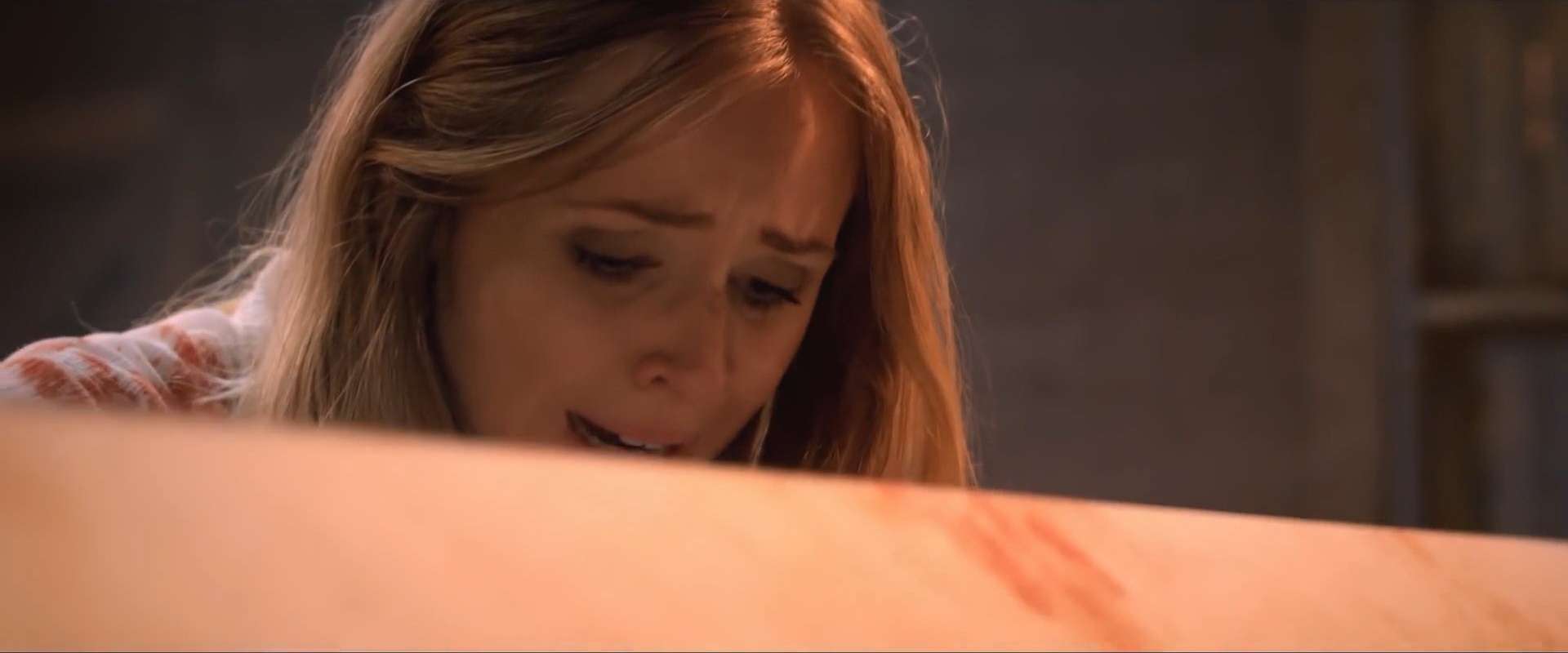
As the film opens, Morris (Tony Curran) returns home and tells his 20 year old daughter Lauren (Diana Vickers) that the unconscious passenger in the front seat of his car is someone he found in a crashed car. They take Jake (Rupert Hill) into the house and when he comes round, insist he stay the night. As time wears on it becomes clear that the relationship between father and daughter is unusual at best, that Morris is not well balanced, and that Jake isn't going to be allowed to leave.

Awaiting starts reasonably promisingly. The first act has a low key menace thanks to the queasily too close relationship between Morris and Lauren, and both Tony Curran and Diana Vickers (a former X Factor star in only her second feature) play that dynamic well. The way Morris has infantilised Lauren in order to control her is hardly a new idea, but it is effectively executed. An even more chilling version of this dynamic comes into play in a scene set at 'Christmas' (which Morris and Lauren celebrate in September). Lauren comes down in her late Mother's dress, dolled up, and acts the part of her deceased parent, even kissing her father. It's the film's best scene, hinting at a perversity that could be interestingly built on, especially given how good Curran and Vickers are in the moment. Sadly, Mark Murphy throws this moment away. It's frustrating, because done right (as in Josephine Decker's Thou Wast Mild and Lovely), this dynamic can be intensely creepy and provocative, here it's a loose end, an abandoned idea to facilitate the plot.

Even in the decent first act, problems are apparent. Rupert Hill isn't especially well served by a screenplay that gives him little in the way of personality and some rather clunky and cliché dialogue, but where Curran and Vickers sometimes overcome the same issues, Hill's monotone performance can't. This is a problem because he is, in many ways, the film's 'final girl' figure, and the fact he's so dull makes him hard to root for.

In the second and third acts, Awaiting becomes ever less distinctive, setting in motion the wheels of the plot-o-matic, allowing it to clunk through its default torture porn setting. Murphy plunders other movies like a magpie on a shoplifting spree. You'll recognise bits of Mum and Dad, Saw, We Are What We Are and just about every backwoods and torture porn slasher of the past few years. There's nothing inherently wrong with being generic, genre exists because it works, but if you are going to be generic after so many films have gone before you, then your take on the genre had better either have something to add or stand alongside the absolute best of its kind. Neither of these things are true of Awaiting.

I wrote the above paragraphs a day or so after viewing Awaiting, and I stand by them, but they merely scratch the surface of how depressingly unoriginal this film really is. About a week after seeing Awaiting I stumbled on a 1989 Canadian film called Cold Comfort. To say that Mark Murphy has drawn inspiration from the film (which he has told us he may have done, unconsciously, having seen it when he was younger) is, in my view, to dramatically understate the issue. For its first two acts the setting, the plot, the characters and their relationships to each other and even a clutch of scenes seem to be extremely closely influenced by equivalent moments in Cold Comfort.

If the problem were merely that one or two scenes echoed Cold Comfort then I would have added it to the list of films mentioned above and moved on. The problem seems to run much deeper. For example Awaiting's best scene, the queasy Christmas meal, is echoed almost beat for beat from Cold Comfort. In Awaiting the scene is set at an inappropriately timed Christmas, in Cold Comfort the celebration is of the 'Lauren' character's birthday, with the film introducing a lot of ambiguity about exactly how old she is. In both films the young woman comes downstairs dolled up, wearing clothes that belonged to her deceased mother, and puts on a sexual performance (a striptease in Cold Comfort as opposed to Awaiting's kiss) for the benefit of her Father and the man he has kidnapped and is holding hostage. The way the story proceeds immediately after this scene is also only minimally different in Awaiting.

This is just one of many examples in the opening twenty minutes alone of scenes that seem to astonishingly closely echo Cold Comfort. The extreme closeness of both the narrative beats and the images of the two films continues through the second act, before they drift further apart as Awaiting moves into a much more visceral third act. Even here though, there are still scenes that resemble each other very closely. This is problematic not only because it accentuates Awaiting's myriad flaws, but because it makes it very hard to credit Mark Murphy with its few successes, as most of them come in the portions of the film most closely echoing Cold Comfort.

Awaiting's third act brings it's own problems though. In its final half hour it becomes a series of scenes that you imagine must surely be the film's nadir, yet they aren't. In one especially cliché moment, Curran wrecks his serial killer lair in a fit of slow motion rage. This is such a hackneyed device that for it to be effective you must do something very different (look at Philiip Seymour Hoffman's slow, deliberate, destruction of all the stuff that surrounds him in Before the Devil Knows You're Dead), and simply shooting in slo mo doesn't really cut it. The character development, especially of Lauren, feels rather disjointed and there is one twist that, while a little bit surprising, is still ripped from yet several more better films. 

The film has two climactic sequences, both howlingly awful. First comes the exact ending you'd expect; a slow motion chase through the woods, complete with music that is desperate to convey some kind of epic gravitas on to the final conflict between our ineffectual hero and his ever less convincing antagonist. The clichés in the dialogue reach their ne-plus-ultra here, when Lauren actually says to Jake, in all seriousness, ”don't quit on me now”. My compliments to Diana Vickers for successfully keeping a straight face in that moment. Murphy manages to find an even less appropriate piece of music for what seems like the film's final coup de grace, then deliver a final confrontational beat so telegraphed and so hackneyed I was amazed that he didn't bother to in some way subvert it. And yet, the worst is still to come, in a coda that draws on The Texas Chainsaw Massacre and We Are What We Are (nope, not setting yourself up to fail there at all) and provides one character with another instant personality transplant. It is terrible, and loses the film a grade point all by itself.

Whether you see Awaiting or not – and frankly I can't suggest that you do – the one thing I would recommend that you do is seek out Cold Comfort, which is a considerably better and more original film, with outstanding performances from Margaret Langrick and Maury Chaykin. Ultimately the best thing about Awaiting is that it gives me a chance to recommend a much better film that you've probably never seen.

Sam's score:


Steve's second opinion:

My initial reaction to Awaiting was somewhat more enthusiastic than that of my Afraid of the Dark colleague Sam Inglis.  My tolerance for hackneyed plots is stronger than his and as a result I often find myself inclined to be a lot more forgiving than he is of horror movies, a genre that is , after all, replete with over familiar concepts.

I settled down to watch Mark Murphy's sophomore horror effort and, being a fan of Tony Curran, found myself caught up in this tale of backwoods madness.  Curran makes for a serviceable maniac and, surprisingly, I found myself more than a little impressed by the performance of ex-X-Factor contestant Diana Vickers.

I was settling on a score of 6 out of 10.  Awaiting was no masterpiece but it made for a mostly entertaining, moderately engaging slice of psycho cinema even taking into consideration the timeworn plot, the various script issues and a truly awful ending.  Like I said…I’m forgiving.

But forgiveness is not limitless and as soon as I saw Cold Comfort it would be a bit of an understatement to say that I was surprised by the extent to which the similarities between the two movies stack up. Awaiting mirrors huge parts of Vic Sarin’s 1989 chiller to such a degree that it’s impossible to avoid decrying it as an act of, at times, slavish mimicry.

Almost everything I enjoyed about Awaiting before I watched the superior Cold Comfort has been sullied by the extraordinary parallels between the former and the latter.  To be clear…I'm not talking about inspiration.  There are scenes here that follow almost beat for beat scenes from Cold Comfort to such a degree that is very difficult to accept that it could be down to some kind of unconscious influence.

Examples abound and besides the scene mentioned by Sam in his review (the 'birthday' celebration) there's another where the protagonist attempts an escape only to suffer a leg injury when he steps into an animal trap.  This scene does not simply echo its counterpart in Cold Comfort but in terms of pacing, dialogue and camera angles is practically its twin.  But it's not only the big moments that feel familiar there are many smaller echoes scattered throughout.  Watching Cold Comfort in the wake of Sam suggesting I do so often felt like an episode of deja vu.

I've racked my brain in an effort to think of another movie that has lifted quite so much of its plot and script uncredited from another film and while there are certainly many examples of films that draw inspiration from works that have gone before I've failed entirely to think of any that do so quite as blatantly or with such regularity.  There's so much of Cold Comfort's DNA in Mark Murphy's movie that if they married each other it would qualify as incest.  As a result I've downgraded my score to a 3 out of 10.  Awaiting is a movie that is creatively bankrupt and like Sam I recommend tracking down Cold Comfort which is a real under the radar gem.

Steve's Score:


Monday, 31 August 2015

Frightfest London 2015: Landmine Goes Click review

Dir: Levan Bakhia
Landmine Goes Click is one of those films that I am torn on reviewing. On the one hand, I want to spread the word and hopefully get more of you than might otherwise do so to watch it. On the other hand, I can't talk about the things that most make me want to recommend it, because you absolutely mustn't know about them going in, or the film will be robbed of at least some of its desired and powerfully delivered effect.

The film opens with three friends – Chris (Sterling Knight), Alicia (Spencer Locke) and Daniel (Dean Geyer) – on a walking holiday in Georgia. Alicia and Daniel are getting married, and Chris is acting as best man, but Chris and Alicia are debating whether they should tell Daniel that, once, some time back, they slept together. The point turns out to be moot. When Chris steps on a landmine it seems to be an accident, but in fact it is Daniel's revenge. He leaves Alicia and Chris to try to save themselves. Eventually, potential help arrives in the form of Ilya (Kote Tolordava), but he increasingly treats his offers of assistance as a sick game.

That summary only takes us up to the second act, which plays out Ilya's games. Initially it seems that the drama is abbreviated, reaching a crescendo about 70 minutes in, but it's thereafter that Landmine Goes Click becomes a somewhat different film, going from being from a solid and engaging genre workout to become something more disturbing and more impactful. And I can't talk about it.

For much of its running time, Landmine Goes Click trades on stillness. Chris can't move, if he shifts his weight incorrectly he might detonate the landmine, killing or maiming himself and most likely Alicia in the process. This necessity is frightening on its own for a while, but Levan Bakhia knows that he can't trade on the same threat without variation for long, and he manages to explore more elements of the film's enforced stillness as it goes on. Once Ilya arrives there is the constant and growing threat that something he does – starting out by insulting him and Alicia before moving on to assaulting Alicia in escalating ways – will make Chris move. More remarkably, given that the film's first hour is set entirely in open spaces, this stillness allows Bakhia to find a claustrophobia that only increases the tension.

The series of events starts out extreme and only becomes more so as the first two acts run on, so it's surprising, and largely thanks to strong performances from the three central actors, that the main thing that strains credulity here is the extremity and imagination of Daniel's vengeance. Once you accept that, the rest of the film flows with a nightmarish logic from point A to B. 

The performances all have to evolve, but none more so than Sterling Knight's. Chris starts off as a pretty typical guy in his mid-twenties. He fucked up royally with his friend's girlfriend, but he wants to come clean, to do the most right thing left to him. Once he's trapped on that landmine, Knight's performance coils like a spring, but that energy can't be released or it will destroy him and, perhaps more importantly, the person he loves. The annoyance he feels with Ilya may even start out a little rude (if understandable in the  stress of the moment), but the invective he spits at the man who is supposed to 'help' them not only becomes more appropriate, the impotence of it becomes ever more upsetting. This builds to an horrendous moment when you can't help but place yourself in Chris' shoes, watching, helpless to do anything, as the worst of Ilya's assaults on Alicia plays out.

Spencer Locke has the film's weakest part, and one of its most problematic. At times, Landmine Goes Click seems to want to visit the worst punishment on women for things that were either partly or entirely the fault of men. This doesn't entirely take away from the film's other qualities, but I did find it a queasy reality at times, whether it's an intended message or not. This said, Locke is excellent as Alicia, desperate to help her friend, to the point that she will degrade herself in painful ways for the chance of a chance to give Chris better odds. What she and Knight bring most powerfully to the film is a sense of their characters responding naturally to being stuck in a nightmarish moment, an effective contrast against Kote Tolordava's broader performance.

Tolordava is also very good, if a little too nakedly menacing a little too early in the day. However, you get a sense, later confirmed, that there is a reason for this. In a performance that goes to progressively nastier places, Tolordava makes Ilya's progression from cruel joker to something much more lastingly damaging one that is credible step by step.

It's difficult to talk about much of Landmine Goes Click beyond the basic setup and shape of the first two acts, which is a shame, because it is the third act that shifts it from a solidly effective, sometimes nasty, genre piece to something that punches much harder and will leave you sitting slack-jawed at the end of the film. Suffice to say that the film shifts locations and genres. It remains in a single space - this one naturally, rather than artificially, enclosed - but shifts both the power dynamics and the performances. Sterling Knight, suddenly more playful, is exceptional in this section, and the film's final shot rests disturbingly on him.

I'd like to tell you more, but trust me, you'll thank me for not doing so. Let's talk about it in the comments after you've seen the film.

Sunday, 30 August 2015

Frightfest London2015: AfterDeath Review

Dir: Gez Medinger, Robin Schmidt
Ask most people and they'll tell you that the most profound question asked by a typical horror film is 'how's the next character going to die?' Sometimes they're right, but it would do the genre a major disservice to think that was all it ever had on its mind. AfterDeath, as you might imagine from the title, deals in some pretty big ideas, but it does so in a small scale way that pulls you in to the situation as much as it does the films questions and proposed answers.

As the film opens Robyn (Miranda Raison) washes up on a deserted beach. Written in the sand are the words “Even the good are damned” and all she can see is a lighthouse and a small cabin. In the cabin Robyn finds Seb (Sam Keeley), Patricia (Elarica Gallacher), Livvy (Lorna Nickson Brown) and Onie (Daniella Kertesz). The others inform Robyn that she, like them, is dead. Stuck in a limbo of sorts, Robyn tries to get the group to figure out why they are trapped together and how they can escape, potentially through Onie, who keeps vanishing and reappearing.

AfterDeath sets its pieces quickly. Characters are drawn in short order, if a little sketchily - Seb's a Jack the lad type, Robyn the constant manager, etc - but the film does find time to deepen these characterisations (with one exception) as events begin to unfold. To begin with things seem a little by the numbers; characters trapped in a room, having to figure out how they're connected between occasional attacks by something that seems, initially, like a pretty standard issue movie ghost. Once the characters begin to figure out what's going on though, things get interesting fast.

The film engages with ideas of heaven and hell, of sin and exactly what that might mean. We first see this through a game of truth or dare in which the cabin's occupants reveal bad things they have done that might have sent them to what they have come to believe is hell. For a while the film threatens to go off the rails here, as it begins to paint Seb as a pretty black and white bastard, but the contrast between his sin and that of the women in the cabin is thrown into sharp relief by this choice. It's not the film at its most subtle, but it does work. From here, the characters' world begins to shrink ever further, but as it does the questions and ideas expand, up to a truly haunting idea that, for a certain section of any audience, is among the most frightening concepts possible. It would be criminal to go into that idea here, but trust me that line, perhaps 15 minutes from the film's end, is worth the price of admission by itself.

As the film's ideas become larger and wilder, the performances keep it grounded. Sam Keeley suffers in the second half of the film from having a more broadly drawn character than the women, but his horror at the last demon attack he has to endure is very well played and makes an horrific but outlandish moment land with real impact. The matter of fact way that the characters deal with their situation, even as it grows more extreme, draws you in to the cabin and invites you to examine yourself as the characters do themselves. There's little showy going on in the acting, instead the focus is put on making the emotions as solidly real as the situation is supernatural.

All four of the film's female leads deliver excellent performances, with each getting their own particularly resonant moments towards the end. Elarica Gallacher's performance as the outwardly confident Patricia is especially effective when she later reveals deep insecurity, in a scene that is emotional and echoes in the rest of the film. Another particularly strong moment comes right at the end as Livvy, who has seemed a rather unfocused character, finds purpose and resolve at the most important moment possible, it's an affecting moment from Lorna Nickson Brown, and one that builds on the emotion of her last scene with Onie. These last moments are also some of the best of Miranda Raison's performance, as a huge conflict (and a key twist) play out silently. None of this is to say that the performances aren't effective throughout, but they build, as the film does, to this crescendo.

There is a slight Cabin In The Woods feel to AfterDeath, but with none of that film's winking, often rather smug, tone. Instead directors Gez Medinger and Robin Schmidt and writer Andrew Ellard keep the focus on the ideas. Medinger and Schmidt, for their part, keep the film visually interesting despite the limited settings they have to work with. They find some memorably nightmarish imagery too, especially when the light from the lighthouse illuminates the cabin. They have also managed to marshal, on what must have been a small budget, CGI that is effective, well used, and often genuinely creepy and unnerving.

AfterDeath's ideas aren't new as topics in horror, indeed a couple of films have, over the past few years, even more successfully explored some similar metaphysical concepts, but Ellard's screenplay separates itself and discusses and engages with these ideas from a different angle. It's a refreshingly intelligent piece of writing, matched by strong performances and direction. Oh and it has the best last line I've heard for some time.

Frightfest London 2015: Sun Choke Review

Dir: Ben Cresciman
Sun Choke is a film as striking as its title (which may be the most evocative of this year's Frightfest). It plays its twists close to the chest, never quite giving up all of its mysteries. Some of the rabbits that director Ben Cresciman pulls from his hat are not unexpected, but it's hard to mind all that much as he pulls together stylish visuals and two outstanding central performances.

We first meet Janie (Sarah Hagan, who you'll likely recognise as one of the 'Potentials' from season seven of Buffy the Vampire Slayer, and should seek out in the outstanding Jess + Moss) as she is going through, apparently for the umpteenth time, a series of psychological tests administered by Irma (legendary scream queen Barbara Crampton), who seems to be part unconventional therapist, part stepmother. Janie appears to be recovering from a trauma that resulted in violence, but is doing well, so well that she is allowed out of the house for the first time in a year. On her first trip out Janie sees Savannah (Sarah Malakul Lane), and becomes obsessed. 

Cresciman never lets us see clearly what Janie did little to land herself under apparent house arrest. There are flashes of a violent scene, but whether we can even be sure that it was real, either in detail or in broader terms, is very much up for debate, even given where the film goes in its third act. It would be easy to see Janie as an equivalent of the 'children' in Dogtooth; imprisoned in a world partly of their making, partly moulded for them from the outside, in this case the battle for us as an audience seems to be unpicking which aspects of Jamie's world are driven by her problems, perhaps even her psychosis, and which have been drummed in to her.

These ideas and questions come through strongly in the performances of Sarah Hagan and Barbara Crampton. Crampton's icily withdrawn nurse/surrogate parent is different from anything I've seen her do before. Irma insists to Janie that she loves and is trying to do the best for her, but she never seems more detached, more passionless, than in these moments. The question of why this is always remains fraught; answers perhaps glimpsed in brief, often overexposed, flashbacks, but when we see Janie essentially being tortured for staying out past her curfew, it's easy to imagine that these flashbacks are not real, or at least not the full story.

Of course Janie is hardly blameless. Hagan is also detached in her performance, but she strikes a different register than Crampton; not icy but longing. Janie clearly longs to be less detached, something we see in the way she fixates on what appears to be an entirely random woman, among the first people she sees on her first trip outside the house in a year. These sequences become increasingly tense as Janie seems to become ever more fixated and unhinged. Most chilling is a sequence in which Janie breaks in to Savannah's house and takes a shower, allowing Savannah to realise someone has been there. Little happens, but it's fingernails down the blackboard tense. Hagan is remarkable in these scenes, even in their most extreme and calculated moments of violence, she puts Janie's sadness front and centre, making us feel a perverse level of sympathy for her, even as the film enters its third act.

The third act is where Sara Malakul Lane's Savannah becomes more than a beautiful prop for Janie to desire, in ways that are perhaps not what you would first assume unless, like me, you are a fan of a certain tawdry but well acted early 90's thriller. Savannah's lack of development in the early part of the film is one of its weaker aspects, but Lane makes for an effective and sympathetic damsel in distress and, with her doll like prettiness, a credible object of Janie's instant desire. Beyond the role's exposing nature though, she's not especially stretched. On the other hand, Hagan's shift from a withdrawn but sympathetic character to a silently steely one (perhaps taking on some of Irma's attributes) is well handled by the actress and only makes her performance more intensely creepy. With the build and the payoff, Cresciman manages to achieve an intriguing mix of the scary and the sad, which gives Sun Choke a tone that sets it apart from its influences.

The film marks out Sarah Hagan as a fearless performer of great promise, hers is one of the best performances by a lead actress this year. Sun Choke also proves again that Barbara Crampton always had more to offer than being the decorative scream queen. I'm glad she's getting to show that now. This isn't a flawless film, but it is never less than gripping and the central performances transcend its few weaker moments. It will be interesting to see where Ben Cresciman goes from here.

Sunday, 24 August 2014

Frightfest London 2014: Truth or Dare


Dir: Jessica Cameron
Truth or Dare has a strong, simple concept: a group of friends who call themselves the Truth or Dare Devils  and have become popular through uploading dare videos to youtube are kidnapped by Derik (Ryan Kiser), their biggest fan and forced into a deadly version of the eponymous game, all of which is being filmed and uploaded to their channel.

Jessica Cameron's feature directorial début does work on a level of commentary; it has things to say about obsessive fandom and the way fans increasingly are able to feel like they know their idols, thanks to social media. Happily, Truth or Dare is no po-faced examination of these issues, nor is it a moral panic film about the perceived dangers of the net, rather Cameron and co-writer Jonathan Scott Higgins use their theme as a hook on which to hang a fun, funny and increasingly extreme 80 minutes of horror.

Their are two great advantages to basing the entirety of a film around a game of Truth or Dare: it imposes a structure, with the characters each taking their turns, and the dramatic stakes are built in, as either option is likely to lead to something unpleasant, be it a secret being revealed or dare that is difficult to stomach or achieve.  Cameron takes full advantage of both of these virtues, building the horror and the stakes turn by turn as the games becomes ever more extreme.  This also allows the film to deal in different kinds of horror; from the shock of the opening to the psychological horror of early revelations to the visceral, painful, gore of the last 15 minutes.

The biggest directorial choice here is that of the shooting style and, thankfully, Cameron opts not to shoot the whole film as found footage (though she does make use of the camcorder that the group's captor is using during the game).  The great virtue of this choice is that it means that we can focus on the story, rather than on the mechanics of the film's style.  The screenplay isn't always completely plausible, especially the amount of dark secrets in this one room and the idea that the videos being uploaded by Derik are getting 400,000 hits within about 20 minutes.  That said, the screenplay builds effectively and delivers a lot of nice shock moments, particularly a cool one for Cameron herself, responding nonchalantly and unexpectedly to an extreme dare.

The performances are a mixed bag, but there are some real highlights.  Ryan Kiser's twitchy mania lends an unpredictability to Derik that sets the film effectively on edge right from his first appearance and Jessica Cameron and Heather Dorff are increasingly effective as the film ratchets up the punishment being doled out and reveals more and more about their characters.  The other performances have their moments, but don't, overall, match up to the three leads, it's here that you can sense a little time and budget pressure on the film.

Truth or Dare isn't the most visually interesting of films, but that's more down to the single setting and the turn based structure, which, effective as it can be from a story point of view, also lays down a visual template for the film that doesn't always work to its advantage.  However, the film is never dull and, when it comes to what horror fans are likely to care most about; the gore effects, acquits itself very well.  There are, again, a couple of glimpses of possible time pressure in the visuals, especially in one glaring (if brief) continuity error, which really should have resulted in another take.

Overall, Truth or Dare isn't a masterpiece. Its origins as a project conceived and made by a group of friends are clear in the sometimes scrappy feel of the project, but Jessica Cameron and crew largely turn this to their advantage.  The somewhat frenzied atmosphere after the group are kidnapped papers over some of the film's rougher edges, and throws us right in with the characters.  It's a fun, engaging, nasty little film and promises interesting things to come from this team.

Saturday, 23 August 2014

Frightfest London 2014: Housebound


Dir: Gerard Johnstone
Housebound, if the critical reaction so far is anything to go by, appears to be on track to be one of the big hits of Frightfest, but it left me extremely disappointed, and not a little baffled as to why it's had such a great reception so far.

Kylie  (Morgana O'Reilly) is in her mid-twenties and after a botched cashpoint robbery she is sentenced to eight months house arrest at her estranged Mother's (Rima Te Wiata) home.  Kylie's mother has long believed the house is haunted, which Kylie dismisses until she begins to hear noises.  After one incident Kylie's probation officer Amos (Glen-Paul Waru), who is interested in the paranormal, begins investigating the history of the house, eventually drawing Kylie in to what seems to be developing into a murder mystery.

Housebound is essentially a film of two halves, neither of them especially original or notably brilliantly executed.  In its first half it develops into a very standard issue noises off haunted house movie; creaking pipes, creepy props and the odd boo scare.  The second half switches focus slightly, becoming a murder mystery (but not a terribly well developed or interesting one) with horror undertones.  I've also seen reviews allege that Housebound is meant to be a horror comedy.  I'm not sure where anyone gets that impression, but I can only recall one thing I'd call a joke.

Morgana O'Reilly is okay as Kylie, but she's not an especially interesting or enjoyable character to follow.  Kylie treats everyone around her (Mum, Stepfather, probation officer, psychiatrist) with contempt and evolves only minimally as the film goes on.  You can't blame O'Reilly for turning in a one note performance when that appears to be what was on the page, but one note it is.  The only character you can really root for here is Amos, (and Glen-Paul Waru does a nice job in the part) but the film does less and less with him as it goes on and he stops fulfilling its exposition needs by motivating Kylie (a bit).  By the end, Housebound seems to be chucking things at the wall to see if they'll stick, and for me they seldom do, especially in the case of a character introduced late in the day to no story purpose but to be a red herring (also, where does he get his make up?)

In a murder mystery there is often a balancing act between seeding your solution so that it doesn't arrive out of the blue and tipping your hand too early.  Housebound doesn't strike this balance well, instead it simply seems to run out of characters who could have been responsible, before surrendering to a very rote stalk and slash ending.

There are a few nice ideas in Housebound, but several are poorly used.  The fact that Kylie is tied to the house by the ankle bracelet that enforces her house arrest is an idea that promises much drama, but it's only used once and the twist with Amos' character, while a fun moment, means it can't pay off a second time.  Only a couple of scenes stand out as being truly effective. First is the one joke I recall, which starts by playing on a typical shower scene and has a neat payoff.  Secondly there's a decent suspense scene as Kylie searches the house of her leading suspect in the murder.  These moments are fine, but they hardly add up to much when combined with the rest of the film.

Housebound isn't terrible, if it were I actually might have had more fun with it, instead it's a rather dull exercise that walks two well traveled paths and isn't especially interesting company on either journey.

Sam's Score

Sunday, 25 May 2014

Lost Horrors: Mikey [1992]

To understand why, beyond its not being especially good, Mikey has become the forgotten piece of horror history that it is you need to know a little bit of recent UK history, so please bear with me.

In February 1993 a two year old boy named James Bulger was taken from a shopping centre in Merseyside.  Following this, Bulger was tortured and murdered by the side of a railway line.  This would have been a shocking crime anyway, but it was made all the more so when it became clear that it had been perpetrated by two ten year old boys; Robert Thompson and Jon Venables.  The British tabloid media, looking for easy answers as to why this tragedy had occurred, settled on pinning the blame on movies, and on Child's Play 3 in particular.  I've written in other places about the fact that this narrative, which, 20 years later, remains the one thing most Brits know about Child's Play 3 was based on nothing, but that didn't stop it from having an effect.

The British tabloids mounted a campaign to ban 'video nasties' and there was a bill introduced in the House of Commons that would have required any film "unsuitable for home viewing" to be banned on video, effectively outlawing any film not suitable for children.  The bill didn't pass, but there was a censorious climate and both distributors and the British Board of Film Classification seemed nervous.  Child's Play 3 was withdrawn by its distributor.  Warner Brothers delayed the video release of Natural Born Killers and certificates for films like Reservoir Dogs,  True Romance and Bad Lieutenant were delayed.

Mikey shouldn't have been caught up in this controversy.  It had received an uncut 18 certificate in November 1992, but by the time of the Bulger murder and the surrounding moral panic it had still not been screened in the UK.  In a move that, as far as I can tell, was completely without precedent, the BBFC director James Ferman, in direct response to a story in the Daily Mail, demanded the return of Mikey's certificate, retroactively banning it in the wake of the Bulger murder.  Having never been resubmitted to the board Mikey remains, in effect, banned.  So let's take a look at the film behind this strange case of censorship.

Honestly, it's hard not to be disappointed.  Mikey is very much a bog standard slasher movie, with little to distinguish it beyond its very silly plot, which is riddled with holes you could drive a truck through.  The film opens with nine year old Mikey (Brian Bonsall) killing his parents.  The stupid starts pretty early.  Mikey kills his mother by turning on her hairdryer and throwing it in the bath, except he doesn't throw it IN the bath, she catches it... and still gets electrocuted.  I'm not sure how that works.  Then Mikey makes his father fall through a glass door by having him slip on marbles he's left on the floor before bashing his head in with a baseball bat.  It's a pretty grim sequence, but hard to take seriously because the mechanics aren't especially credible in either death.  This is also where, both in its structure and in the motives of its leading character (Mikey accuses his parents of not loving him any more) the film's main influence becomes clear: it's The Stepfather, with a nine year old instead of Terry O'Quinn.

Following this opening the film settles into its main plot, with Mikey being adopted by a couple of nice, white, middle class people (Mimi Craven and John Diehl).  How this happens without them ever having met him before is never addressed, nor is the fact that they're not given the full facts on Mikey's past (his adoption records are sealed, because, sure, that's a good way to start addressing psychological trauma).  Anyway, Mikey's a perfect angel; he loves his new parents, does well at school, getting on with his teacher Miss Gilder (Ashley Laurence, mis-credited in the titles as Ashley Lawrence).  He makes friends with Ben, the kid next door (Whitby Hertford) and develops a crush on Ben's older sister Jessie (Josie Bisset).

Obviously things start to seem off, but nothing extreme enough to raise any concerns unless you've seen the opening of the film (or, I don't know, been told the details before you adopted the kid).  It takes nearly an hour for the film to ramp up again, and when it does... it's kind of stupid.  Okay, so when he kicks a radio into a jacuzzi to electrocute Jessie's boyfriend there's probably not much the victim could do, but the other victims often have nobody to blame but themselves.  HE'S NINE.  Okay, he hits his adoptive mother's hand with a hammer, which, surely, is her cue to slap him with the other hand and then take the hammer from him.  He's nine, she's surely going to be able to overpower him.  This goes on and on.  Ashley Laurence's death is also pretty funny, because all she has to do is take a side step, but no, the idiot plot is in full swing by this point. 

It's something of a pity that the film all but collapses under the weight of its own ridiculousness, because there are things to recommend it.  Brian Bonsall doesn't have an easy job here, but actually he does pretty well as Mikey.  He's convincing in the early scenes when we're supposed to sense something under the surface when Mikey is playing nice and he's got a few chilling moments ("I'm watching Mikey's funniest home videos") before the ending sees him having to resort to nonsensical pre-kill one liners ("Miss Gilder you're the best teacher I've ever had, but there is one thing you never taught me... How to die!")

The adults also do pretty well, given the kind of film this is.  Diehl and Craven both come off as almost negligently unaware when it comes to some of Mikey's disturbing behavior, but that's the fault of the writing.  Acting wise, they do their job well enough, and Craven at least seems to be enjoying some of the silliness of her part.  Josie Bisset also has to battle some cringemaking dialogue, especially in her first scene, in which Mikey and Ben dupe her into giving Mikey mouth to mouth, but again, she's fine in her part, and more than capable of being the crush-worthy girl next door.  What the film really misses is a formidable final girl, probably because, since Mikey is nine, she'd kill him without any fuss.  It seems, for a while, that Ashley Laurence is being set up for this role, but it never pays off in the way you'd like it to.

You can see why, in the wake of the Bulger murder, this film would have given the UK censors pause.  Silly as it is, the fact that the central theme of a child murdering people would have meant that the contentious elements of the film could never have been cut around.  Today it looks quaint.  The violence isn't all that graphic, and is surprisingly infrequent until the last half hour.  Today the theme would be unlikely to trouble the BBFC as much as imitable techniques (the electrocutions) and a shot that clearly shows Bonsall in the same frame as a topless Mimi Craven.

Ultimately, Mikey is little more than a forgettable slasher, and it would likely have fallen even further into obscurity but for its unfortunate timing.  It has some interesting elements, but even Bonsall's solid performance does little to make a great case for lifting this one out of the basement in which it has spent the past 20 years.

Tuesday, 4 March 2014

Frightfest Glasgow 2014: Proxy - Review

Note: Much to my regret I didn't see this film at Frightfest Glasgow, but as it played there this review is part of our coverage.

Dir: Zack Parker
Proxy presents a challenge to a critic.  There is a lot here, a lot that I want to talk about, but the nature of the film is such that if I tell you too much I'm concerned that you won't have the same experience with it that I did, and I want you to have that experience.

A good place to start any film review is, perhaps, with the first words that come to mind when you think back on the film you're writing about.  In the case of Proxy those words are 'Oh...Fuck'.  It seemed that every twenty minutes or so during the film's two hour running time I was saying those words, and they have come to essentially define my reaction to it.  The first of these 'Oh...Fuck' moments comes right at the beginning of the film, as heavily pregnant Esther (Alexia Rasmussen), leaving her latest doctor's appointment, is grabbed from behind, dragged into an alley and beaten by an assailant, who then takes a brick and beats her around the bump, killing the baby.  It's here that it becomes clear that Proxy is, at times, a horror film of an especially confrontational nature.

From there the film evolves, changing tone and focus several times, but never far from another moment that has that sort of impact, if not always in the same visceral way.  The other event (that I can talk about) comes when Esther goes to a support group for bereaved mothers.  There she meets Melanie (Alexa Havins) and the two hit it off.  One day, after Melanie fails to attend the group, Esther sees her in a department store, and also sees something that convinces her that Melanie is more like her than she had initially expected.

Perhaps what is most intriguing and impressive about Proxy is how co-writer and director Zack Parker juggles tone.  At times it appears to be a sad and reflective drama dealing with the loss of a child, but soon elements of visceral violence and disturbed psychology begin to intrude from all sides, also including Esther's girlfriend Anika (Kristina Klebe in a brittle and sometimes scary performance) and Melanie's husband Patrick (Joe Swanberg).  The quietness of the tone of most of the film allows the shock moments to be much more impactful than they are in more gore soaked films, which are often simply numbing, but when those moments come they seem to flow naturally out of the narrative, not to simply be inserted for shock value.

The performances help immensely with this balancing act.  It would be unfair to talk about exactly how Esther and Melanie are similar and exactly how each of them is hiding something, be it a motivation, a lie or a personality trait, truly dark.  This makes it difficult to tell you exactly how good Alexia Rasmussen and Alexa Havins are.  Havins has, perhaps, the tougher role; she is quite outwardly simple for most of the film's running time.  Her motivations, even after the first revelation about her, aren't hard to read so much as they are hard to empathise with.  It is towards the end that Melanie really begins to shift and there begin to be profound questions about whether she has been shaped by events or there has always been something off about her.  This is one of several things about Proxy that will likely reward a second viewing.  

While Havins has the harder role Alexia Rasmussen certainly has the showier one, but she plays it in a very down to earth way which accentuates the disturbing side of her character.  There is something distant about her from the beginning but when it becomes clear that this is a state not brought about by her trauma but more like a default for Esther your sadness and sympathy for her turns to something much more unnerving.  Rasmussen is brilliant here; I've not been so struck by a horror film performance since AnnaLynne McCord's in Excision (which Proxy shares more than a little with, in impact more than in execution).

It's also worth mentioning Joe Swanberg, he may be better known as a writer and director, but he's proven to be a capable actor both in his own films and for other directors.  Here he's probably the closest thing we have to an audience identification point and he's excellent, believable as a man being slowly driven to breaking point by loss and by his wife.  There is, however, one moment I'd have liked Parker to explore further with his character... what exactly is going on in that basement.

I've not seen any of Zack Parker's three previous features, but you can bet that I will be as soon as I can.  For me, Proxy is best in its least stylised moments; the department store scene, for instance, needs no fancy camera tricks or score to unnerve us.  When he does go more stylised Parker's images are always effective but sometimes (as in a mid-movie home invasion) it's just a bit much.  The super slow motion in that scene is reminiscent of Thriller: A Cruel Picture in both its pace and the fact that it is effective for a time, but after several minutes it feels a little self-indulgent and the point seems overstated.  It would, perhaps, work better without the slathered on score that is a problem at a few points, but ultimately the moment goes from being an effective shock to an indulgent art piece that seems dropped into the middle of the film.  However, the rest of the time Parker keeps the direction stylish and taut, sometimes breaking that tension effectively, as in a funny cutaway in the film's closing moments and he draws strong performances from all of his key cast.

As I said, I wish I could get into specifics with this film as there is much to discuss and I would love to have that conversation with some horror fans.  My recommendation is this: see Proxy.  See it ASAP and see it with an audience, then come and discuss it in the comments under this review.

Sam's Score:


Monday, 17 February 2014

Indie Spotlight: Jug Face - Review

It’s true that Jug Face is one of the finest indie horror movies to come along in years.  It’s also true that Jug Face is one of the best horror movies of 2013 regardless of budget (it shares poll position with The Battery in my Top 10 of 2013).  It’s becoming increasingly apparent that if the devout, discerning  genre fan wants to find a movie that is both effective as a horror film and contains even the smallest shred of originality they must be prepared to look beyond the deluge of lacklustre bilge that Hollywood has been force feeding audiences for far too long now.  The most successful mainstream horror film of 2013 was The Conjuring.  I liked it quite a bit but even I have to admit that it was woefully lacking in the inspiration department.  Jug Face is one of a handful of low budget horror movies that went some way toward redressing the balance and making 2013 something less than an almost complete washout for the horror genre.

There is an overabundance of horror movies today that coast by on their ability to make an audience jump out of their seats and/or try to trigger their gag reflex by throwing an abattoir of blood soaked viscera at the screen.  I’m not denying that this approach can be fun.  The Conjuring is a great example of the jump-scare thing being done well but it’s doing nothing that hundreds of movies haven’t already done before.  I’m also fond of well-staged carnage but too often it’s used to prop up a dismal script with nary a new or interesting idea to be found.  So it’s truly a relief to discover a horror movie that isn’t heavily weighted in favour of jump scares alone and has more ideas than gore.  Too many movies forget entirely that a creeping sense of gathering dread is a far more effective way to unnerve and/or scare an audience.  This is an area where Jug Face (and many other indie horror movies) succeeds.  Perhaps it’s something that comes with a lack of money.  If you can’t scare an audience or make them throw up by launching moderately expensive set pieces at them then you have to rely on their imagination.  And a person’s imagination, guided skilfully in the right direction is a far more powerful way of scaring the shit out of a viewer.

Which brings me back to Jug Face; the brilliant directorial debut of Chad Crawfod Kinkle who, armed with very little money, a clever script (which he wrote) and a supremely talented cast has put together a tale of backwoods terror that not only works as a horror movie but also provides much in the way of riveting drama.  The story focuses on a tight knit community who worship a pit in the woods that surround their village.  Once in a while they have to make a sacrifice to this hole in the ground with the victim being selected when one of the villagers fashions a jug out of clay that bears the face of the chosen one.  When Ada (Lauren Ashley Carter) discovers not only that she is pregnant but also that she is next in line for sacrifice she hides the jug bearing her likeness in the woods and starts making plans to escape.  Things do not go according to plan.

The performances in Jug Face range from good to quite exceptional.  I first encountered Lauren Ashley Carter in Lucky McKee’s The Woman where she gave the sort of performance that made me sit up and take notice.  In Jug Face she builds on the promise already shown to provide a perfectly pitched, subtle and at times heart-breaking performance.  She’s one of those special actors who can do more with her eyes than some actors can do with everything they have at their disposal.  She’s incredible here and although much of what makes Jug Face so special rests upon her capable shoulders she has impressive back-up from genre regular Larry Fessenden as her father and, surprisingly, Sean Young, who is terrifying as Ada’s granite hearted bitch of a mother.  Also of note is Sean Bridgers in the role of Dawai.  I was surprised to discover that he had a regular role in the HBO western Deadwood; a show I drank in like the heady, addictive brew it wasHe’s unrecognizable and thoroughly remarkable here.

There’s very little to criticize about Jug Face.  Given the budget it’s no surprise that the special effects, few though they are, aren’t terribly special.  But that’s not important because this isn’t a horror movie that relies on showy effects to succeed.  The community that the story centres upon is brought to life with a keen eye for detail and as a result feels totally authentic.  It’s the authenticity of this backdrop and the plight of Ada that drew me into the story and had me gripped right from beginning right up until the gut wrenching conclusion.  Those who have been raised on nothing but the wham, bam, thank-you ma’am (or no thank-you if you please) MTV pacing of the majority of mainstream horror movies would perhaps complain that Jug Face is slow.  Utter bullshit.  Jug Face is methodically but perfectly paced and understands that the best movies, regardless of genre, work when the audience is invested in the fate of the characters.  This isn’t achieved by racing from scene to scene like a cheetah on amphetamines.  This is accomplished by taking the time to tell the audience enough about the characters to allow a bond to develop.

It’s truly sad that it takes a first time director working on a shoestring budget to show us what a horror movie can be when it’s produced by a group of people with the ambition to create something that isn’t a facsimile of everything that’s gone before.  Jug Face is a unique movie, that, in a year that cannot be described as anything other than disappointing where genre offerings are concerned should, along with a handful of its peers (all low budget, indie movies), be held up as proof that US horror is not as uninspired as mainstream Hollywood would have you believe.  Highly recommended.

STEVE'S SCORE:


Interview with Chad Crawford Kinkle


AOTD: Your script for Jug Face won the Slamdance Screenwriting Competition back in 2011.  Did your original vision make the transition from page to screen intact or did you have to scale things back a little to accommodate the budget?

Chad Crawford Kinkle: I tell people that maybe 40% of what I wanted is in the movie. If I had the experience that I gained from making Jug Face, my first feature, I could have added about 30%. The rest was due to budget and other reasons that were out of my control.
   
AOTD: On Jug Face you were blessed with a talented group of actors to work with. What was the casting process like? Were there specific actors you had in mind for certain roles or was the movie cast entirely through auditions?

CCK: Andrew van Den Houten, the producer, really lead the way as far as casting was concerned. He would come up with names and pass them by me. The only one of the major roles that I came up with was Ada, Lauren Ashley Carter. But of course, I was familiar with her only after watched a blu ray of The Woman that Andrew gave me. We did have auditions for the secondary roles.

AOTD: Are there any past masters of horror cinema whose work you particularly respect and who have had an influence on your approach to film-making?

CCK: I respect them all. Even the ones who didn’t make great movies. They all set out to make horror films the best that they could. But my favorites would be Argento, Hitchcock, Hooper, Polanski, Friedkin, Browning, Bava and so on.

AOTD: Did the central conceit of the clay jug faces and the pit spring entirely from your imagination or did something inspire you? It has the feel of something from folklore.

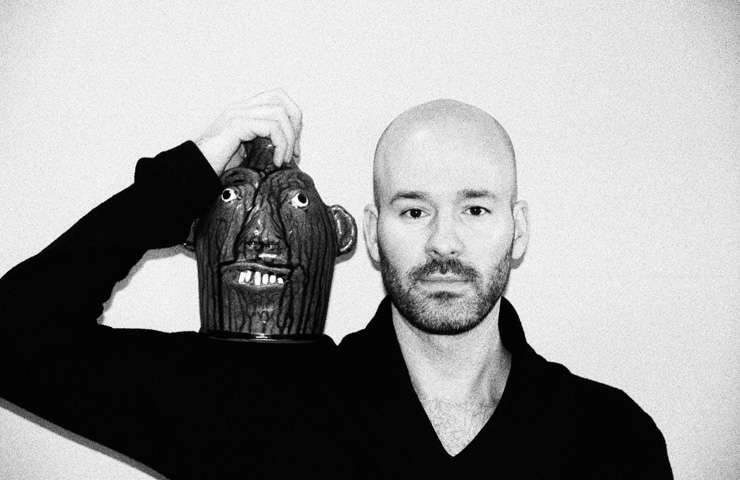
CCK: Face jugs are a real part of souther folk art for the past 160 years. I saw one for the first time at a museum in the north Georgia Mountains and came up the concept for the movie on the spot. The jugs were used to hold moonshine and poisons for farming.

AOTD: The sense of place, customs and history of the community in Jug Face is vital to the movie's success.  How did you go about ensuring that this felt authentic?

CCK: For one, I shot the movie in the area where the story’s culture comes from. Basically, the region of Tennessee where I grew up. But a Director’s job is to control the “vision” of the film so that it feels whole and concrete.
   
AOTD: US indie horror is creatively far more interesting than anything mainstream Hollywood is producing at the moment.  Why do you think this is the case and what movies and/or directors from that scene have made a real impression on you?

CCK: You can be more adventurous with the subject matter if the budget is low. Big budget movies have to get people into the theaters so those ideas need to be more mainstream to make back all the money. Film making is a business at any level. Ben Wheatley is someone that comes to mind who I admire.

AOTD: What should we expect from your sophomore effort and do you have anything on the go yet?

CCK: I’m trying to finish up my next screenplay, another southern gothic horror film. If that doesn’t go anywhere, I have a number of other horror ideas that I want to explore.

AOTD: What horror movies are you looking forward to in 2014?

CCK: I have no idea what’s coming out. Before Jug Face, I read the horror sites everyday and was up on everything, but now I have a lot of catching up to do.

AOTD: Thank you for taking the time to answer our questions.


Saturday, 18 January 2014

Devil's Due - Review

Dir: Matt Bettinelli-Olpin, Tyler Gillett
Devil's Due is not the worst new horror film I've seen in the past 12 months. Please, don't take that as any sort of recommendation. The industry should be hanging its head in shame that not only did it produce this excrementally poor pile of badly shot clichés, but that it's actually recently done worse. 

Devil's Due is a found footage film [sigh] about Zach and Sam (Zach Gilford and Alison Miller), a pair of newlyweds who find that they are pregnant much sooner than planned after their honeymoon. As the pregnancy continues strange things begin to happen both to Sam and in the house. Zach sees people watching their house and becomes increasingly worried and convinced that these events are connected to a strange symbol they saw on the last night of their holiday.

I'm not a great fan of the found footage technique, nor of the way it has come to such prevalence in the horror genre of late.  This film has all the familiar problems that the style throws up, and adds a few of its own.  For me the most pressing question of a found footage film is 'what are we watching'?  There is absolutely no sense of this in Devil's Due, which begins with Police interview footage before switching to (edited) home video taken largely by Zach, who says that he likes to document everything because that what his Dad did (this will never become important).  Later in the film we also see security camera footage cut into the home video.  So what are we watching?  Who cut this together and why?  The film never attempts to frame an answer to this question, even though you can see how it might extract scares from doing so.

The film also appears to recognise the weaknesses of the found footage style, or certainly of the reliance on the characters filming everything, because in its second half it becomes ever more reliant on security camera footage.  This could be because the filmmakers want to show conversations they don't believe that Zach would film, or it could be so they can rip off Paranormal Activity as well as Rosemary's Baby.  I'm guessing it's the latter, given the rest of the film.  In addition to these issues there are many sequences, notably a couple of church scenes, that cheat the found footage gimmick, shooting from an impossible selection of angles (unless we're supposed to be seeing footage from several people's camcorders edited together, but again, who edited it if that's the case?)

There are opportunities for depth here, but the film shuns every one of them.  For instance, Zach and Sam begin the film by getting married in a church.  So are they religious?  How does that then play in to deciding to keep an unexpected pregnancy, especially when there are, to put it mildly, complications?  How does it play into the idea, brought up very late, that there may be some early religious symbol related to the coming of the Antichrist connected to this preganancy?  The film never bothers to address any of these questions.  Religion seems to be here as nothing more than an iconographic trapping, draped over the film to no purpose.

The lack of depth also extends to the characters.  Zach and Sam seem to be young upwardly mobile people, they've got a big house.  I wonder how they afford that big house, we never get any sense of what Zach does and Sam is apparently a student.  A student of what?  The film doesn't appear to know or care, she's basically an incubator with a pretty face drawn on it.  Neither of them has any personality and that goes double for the ciphers that surround them.  When Zach calls someone late in the film after finding something odd in their honeymoon video I had no idea who that person was or why Zach would call him rather than anyone else.  This is typical of this incredibly slapdash film, which unfolds less as a narrative and more as a series of bits, most of them lifted from other films.

Devil's Due is ungodly ugly to look at.  The found footage style means that for the first half of the running time the film is almost always in close up and the frame is constantly juddering, while the second half adds boringly static security footage to the mix.  When something is actually happening (which is rare) you can barely see it and otherwise you're watching a whole lot of badly shot and edited nothing.

From the derivative story to the thin characters to the slapdash camerawork, editing and continuity the whole feeling of Devil's Due is one of “Will this do?”  No.  No it won't.  We have to make that point clear to Hollywood by rejecting shit like this and demanding that they make and release better horror films.  They're out there.  This won't do.

Saturday, 14 December 2013

Carrie [2013] - Review

Dir: Kimberly Pierce
It's important that, should we have any, a film critic is clear about their biases and how they might effect their response to a given film, so, to be clear... I love Carrie.  I love the book, but I especially love Brian DePalma's film, which would be in any conversation I might have about the ten best horror films or the ten best teen films ever made.  In preparing to see this remake I also looked at the 2002 TV version of the story and, while it had significant issues, I found much to enjoy in it.  I suppose this could colour my response to this remake in one of two ways: it could have made it easier, after all, here is a story I know works and I know I respond to.  On the other hand it's also a story I respond very strongly to in one particular version.

There was another reason to be hopeful, director Kimberly Pierce, who has shown herself, especially with Boys Don't Cry, to be an effective chronicler of the lives of people violently rejected by their own society, which, at an essential level, is at least partly what Carrie is about.  She's also a very different filmmaker from Brian DePalma, and it seemed an intriguing choice to have a female filmmaker approach what is also a story catalysed by a character going, biologically, from childhood to womanhood.  

It is, then, a crushing disappointment to have to say that watching this Carrie was, for me, like watching a competent singer deliver one of my favourite songs on The X Factor: it's not that it's terrible, more that they bring nothing new to it and you're always thinking of another, much better, version of the same thing and wishing that was what you were watching and listening to.

It's not good practice, in general, to spend reviews of remakes simply comparing the two (or more) films, but Carrie actively works against you in this respect, because it is so close to DePalma's film for so much of its running time.  This was also true, though to a lesser degree, of the TV version, but there at least in between the swathes of dialogue that seemed to have been cut and pasted from the original film's screenplay there were some flashes of wit and new scenes that added something to the telling of the story.  That's really not true here, instead what we get are slight rewordings of original scenes and the odd contemporary reference jammed in (YouTube, that's a modern thing, right?)

This, however, pales next to the major problem: the casting and performances.  Chloe Grace Moretz is clearly a talented young woman, among the best actresses in her age group, however, she is also an actress who works best within a certain character type and has a particular persona that comes across on screen.  Ever since (500) Days of Summer there has been a no bullshit feel about Moretz and her characters and an inherent strength beyond her years has been a major part of most of her characters.  In this way she seemed to me an odd piece of casting as Carrie White, the wallflower who blooms at prom, so it has proven: Moretz is horribly miscast, especially in the first half of the film.  

This  miscasting is another aspect in which the film almost forces you to draw comparisons.  Brian DePalma cast an actress much older than the character, Sissy Spacek not only looked young but, with her mousy beauty and the way she appears to shrink in the role, seemed like exactly the kind of person who would try, and fail, to simply melt into the background of high school.  Moretz is much younger than Spacek was, younger even than the character, she's also a much more obvious, much more Hollywood beauty.  Of course it's not that attractive people aren't rejected or bullied, but it just doesn't seem to fit Carrie, at least not the Carrie of the first hour of the film.  The only concession the film makes to dressing Moretz down is to give her unkempt hair and little make up for the first hour, but that's not the crux of the problem.  The major issue is that when she's playing the shy Carrie, trying to disappear into the background, Moretz always seems to be acting.  The way she holds herself, the whispered voice, it all feels contrived.  If Carrie's character should feel contrived at any point then it's at the prom, Moretz gets it all wrong.

If the fact that the central performance doesn't work can't be entirely blamed on the actress, that's less true of many of the supporting cast, who do have rather more single note parts to work with.  Wooden spoon winner is Portia Doubleday as Chris Hargensen (another way in which, amusingly, this film echoes DePalma's).  Doubleday totally overplays Chris' bitchy nature, though she's not helped by an extension to the scene where she tries to get the other girls to join her in rebelling against detention.  Nancy Allen overplayed the role too, but by taking it even more over the top Doubleday renders the character little more than an evil cartoon of a high school girl and if even the bitchiness in Carrie doesn't feel realistic, what hope for the rest of the film?

Most of the rest of the young cast just bland their way through the film.  The fashions and hairstyles of the 1976 film may now be laughably dated, but at least you can tell those characters apart.  Here Gabriella Wilde and Ansel Elgort, as Sue Snell and Tommy Ross, prove unmemorable replacements for Amy Irving and William Katt and you shouldn't expect Alex Russell to go on to the big things that John Travolta did after he played Billy Nolan.

Some of this could be forgiven had Kimberly Pierce managed to bring something fresh, a new perspective, to this frequently told story.  There are attempts at updates; Ms Desjardin faces, offscreen, some consequences for her rather unprofessional approach to teaching (within the opening half hour she's slapped one student and sworn at another group) and there is a good idea, though rather hamsfisted execution, in an added scene that sees Chris Hargensen and her Father appeal the refusal of her prom tickets.

The most notable addition comes in the opening, which shows Margaret (Julianne Moore) giving birth to Carrie and only just holding back from murdering her with a pair of scissors.  This is actually effective, and promises an intense take on the Mother/Daughter relationship, but unfortunately this becomes yet another aspect in which the film falls into the pattern of copying DePalma but adding a few new digital effects.  Pierce's take on the material seems to be to treat it as a supervillain origin story, and this leads to some of the film's worst moments.  Carrie's powers are, throughout, much more emphasised and much more willful than they have ever been depicted as before.  This was something that really didn't work for me.  For instance, in the scene where Carrie tells her mother that she's going to prom, the original has a subtle menace thanks to Carrie's soft but firm tone and her (and our) growing knowledge of her powers, but the threat is barely even stated.  Here Carrie uses her powers on her Mother in this scene, in a way that makes it hokey rather than menacing and her increased violence, here and in other pre-prom scenes, undermines any sympathy we might have for Carrie.

The prom scene itself presents a daunting challenge to any filmmaker or actress who wants to reapproach it, because DePalma's handling of it and Spacek's blood covered look are both undeniably iconic images of horror cinema.  It really doesn't come off for Pierce and Moretz.  Their version of Carrie, a sort of vengeful puppeteer, is too basic.  The film never really succeeds in getting into Carrie's head in the way that DePalma managed viscerally with the montage of people laughing at Carrie (which I've always seen as at least half imagined).  In keeping with the supervillain narrative Carrie is all but totally unrestrained, but the CGI assisted carnage lacks the shock value it held in the other versions of the story because it's a small step in from what she's done in the rest of the film, rather than an explosion of rage.

This isn't the worst recent horror remake, actually in one aspect it it does come close to matching the original: Judy Greer is perfect casting as Ms Desjardin, she has an inherent warmth as a screen presence and gives a customarily excellent performance, but overall it's not a good, or even an especially interesting, film.  It would almost be a relief if Carrie 2013 were worse, because then I'd be able to get annoyed about it, but I can't even really do that.  Ultimately this isn't a truly terrible film, just a poor and deadeningly pointless one whose major achievement is that it makes you reflect once again on how great Brian DePalma's film was.